
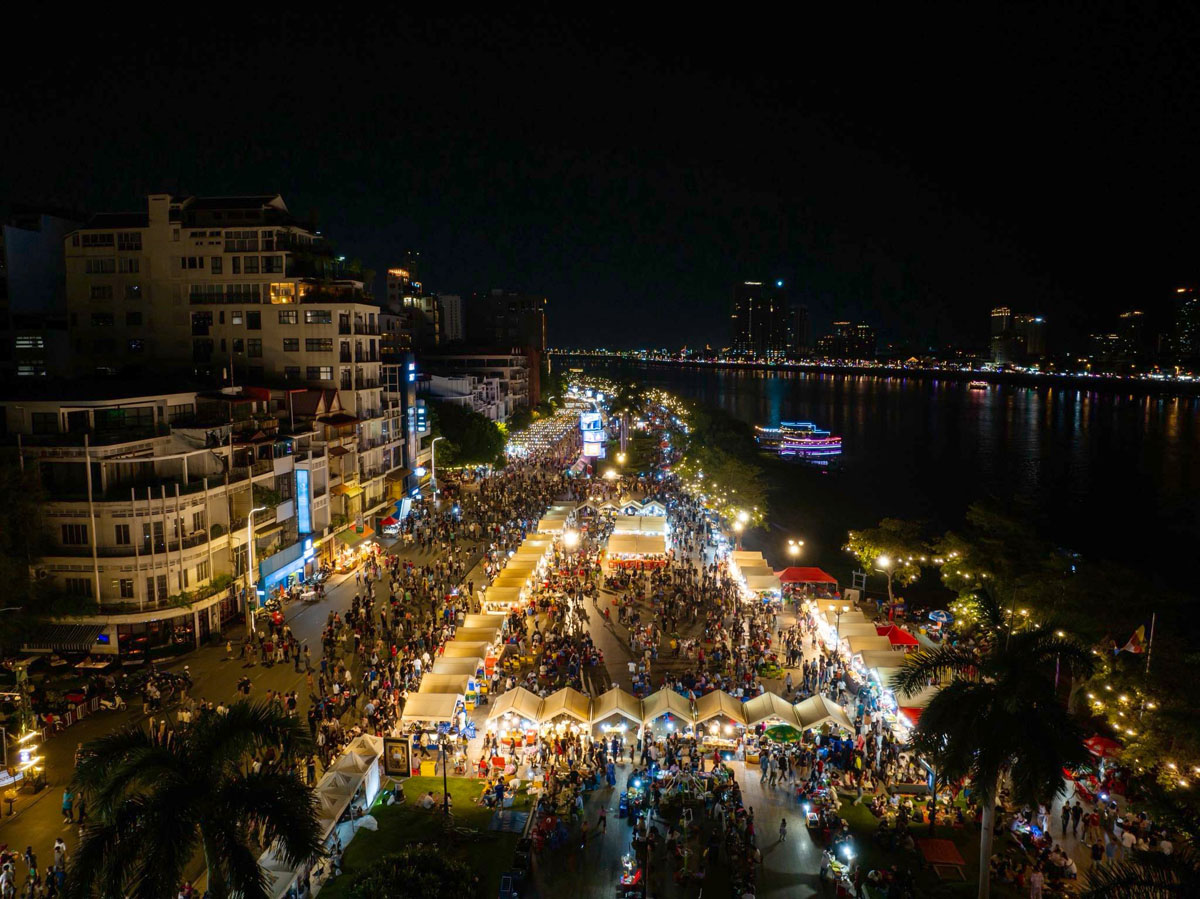
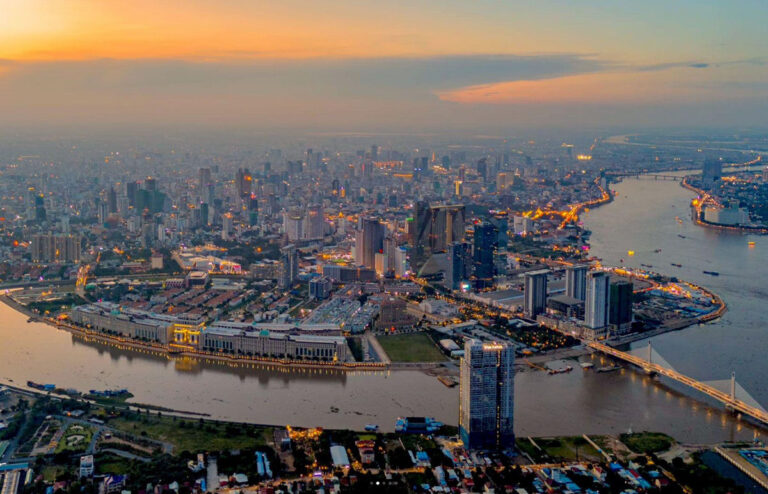
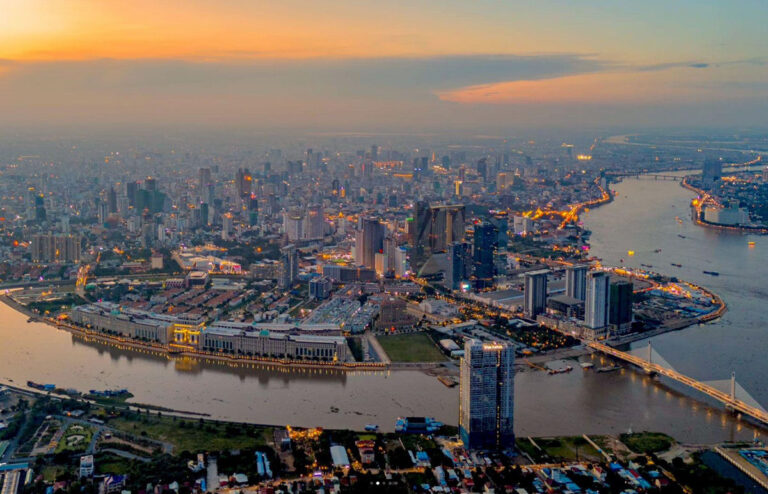
Phnom Penh is Cambodia’s bustling capital, a city where golden temples, colonial-era buildings, traditional markets, and modern skyscrapers reflect a complex and fascinating history. Located at the meeting of the Mekong and Tonlé Sap rivers, it has long been the country’s political, cultural, and commercial centre. The Royal Palace and riverside promenade offer glimpses of Cambodia’s royal heritage, while museums and memorial sites provide an important understanding of the country’s more recent and difficult past. Beyond its historical landmarks, Phnom Penh has a lively atmosphere, with busy markets, excellent Khmer restaurants, fashionable cafés, and an increasingly varied nightlife scene. Although traffic, heat, and crowded streets can make the city feel hectic, many central attractions are relatively close together and easy to explore. Two or three days are generally sufficient to discover the main sights, although a longer stay allows more time to experience its different neighbourhoods. The most comfortable period to visit is usually from November to February, when temperatures are slightly cooler and rainfall is limited. March and April can be particularly hot, while the rainy season, generally from May to October, brings frequent tropical downpours.
Main Transport Hubs
✈️ Techo International Airport (KTI)
Techo International Airport (KTI) is Phnom Penh’s main international airport, officially opened in September 2025 to replace the former Phnom Penh International Airport (PNH). Located south of the capital, approximately 25 kilometres from the central districts, it handles international and domestic flights connecting Cambodia with destinations across Asia and beyond. The new airport is significantly farther from the city centre than its predecessor, so travellers should allow sufficient time for transfers, particularly during periods of heavy traffic. Taxis, private transfers, and ride-hailing services such as Grab are convenient options for reaching accommodation. An Airport Express Bus also connects the terminal with central Phnom Penh, travelling along major roads including Monivong Boulevard and stopping near the central railway station. This can be a more economical alternative, although passengers staying outside the bus corridor may require an additional transfer. When booking flights or arranging transport, make sure to use the new airport code KTI, as the former PNH airport no longer handles scheduled commercial flights.
🚉 Phnom Penh Railway Station
Phnom Penh Railway Station, located near the intersection of Monivong Boulevard and Russian Federation Boulevard, is the capital’s main passenger railway station. Its distinctive colonial-era building remains one of the city’s recognisable transport landmarks. Royal Railway Cambodia operates passenger services along two main routes. The southern line connects Phnom Penh with destinations such as Takeo, Kep, Kampot, and Sihanoukville, while the northern line serves Pursat and Battambang. Trains provide an alternative to road transport, although journey times are generally longer than those of the fastest buses or private vehicles. Services are also less frequent than in countries with more developed railway networks, so checking the current timetable before travelling is important. The station is relatively close to central Phnom Penh and can easily be reached by tuk-tuk or taxi.
🚌 Intercity Bus and Minivan Terminals
Buses and minivans are among the most widely used ways to travel between Phnom Penh and other Cambodian destinations. Unlike cities with a single central bus terminal, Phnom Penh has numerous departure points operated by different transport companies, often located in separate parts of the city.
Some of the principal operators include:
- Giant Ibis Transport: A well-established company operating connections to destinations such as Siem Reap, Kampot, Sihanoukville, and Battambang. Its Phnom Penh terminal is located on Street 106, near the Night Market and Riverside area.
- Virak Buntham Express: One of Cambodia’s larger transport operators, with an extensive network of buses, sleeper services, and minivans connecting Phnom Penh with numerous cities and provinces.
- Larryta Express: A popular operator offering minivan and bus connections to destinations including Siem Reap, Battambang, and Sihanoukville.
- Capitol Tours and Transport: A long-established company operating provincial connections from its own departure locations, including the area around Orussey Market.
International buses also connect Phnom Penh with Ho Chi Minh City in Vietnam, generally travelling through the Bavet and Moc Bai border crossing. Because departure points can change and companies may operate from multiple offices, always verify the exact boarding location indicated on your ticket rather than heading to a generic bus terminal.
⛴️ Riverside Passenger Boat Departures
Phnom Penh’s rivers are not only an important part of the city’s identity but also provide a useful international transport connection. Passenger speedboats operate between Phnom Penh and Chau Doc, in Vietnam’s Mekong Delta, offering an alternative to travelling by road. Operators such as Hang Chau Tourist provide services along the Mekong, with departures from the Sisowath Quay area. The journey generally takes several hours and includes formalities at the Cambodian and Vietnamese border checkpoints. It is an interesting option for travellers continuing towards the Mekong Delta, although services, departure points, and schedules should be confirmed directly with the operator before travelling. The central riverfront also has piers used for local ferries and sightseeing boats, but these should not be confused with the departure points for international passenger services.
Getting Around Phnom Penh
Phnom Penh has no urban metro or passenger railway network for travelling between its neighbourhoods, so most local journeys are made by tuk-tuk, taxi, motorcycle taxi, or public bus. Traffic can become congested during rush hour, but the central tourist districts are relatively compact compared with larger Southeast Asian capitals.
🛺 Tuk-Tuks and Ride-Hailing Apps
Tuk-tuks are one of the most convenient and characteristic ways to get around Phnom Penh. Traditional Cambodian tuk-tuks consist of a passenger carriage pulled by a motorcycle, while smaller three-wheeled vehicles, sometimes called remorks or auto-rickshaws depending on their design, are also widely used. For visitors, Grab and PassApp are particularly useful because they allow passengers to enter their destination and see the quoted fare before confirming a journey. This avoids the need to negotiate prices directly with drivers and makes travelling between attractions straightforward. Traditional tuk-tuks can also be hired directly from the street, but the fare should be agreed upon before departure. For longer sightseeing trips involving several stops, drivers may be willing to arrange a half-day or full-day service at a negotiated price.
🚕 Taxis and Private Cars
Air-conditioned taxis and private cars are available throughout Phnom Penh, although they are less visible on the streets than tuk-tuks. Ride-hailing apps are usually the easiest way to arrange a vehicle, particularly when travelling with luggage, during heavy rain, or late at night. Private cars are also convenient for visiting attractions outside the central districts, such as Choeung Ek, especially when travelling with other people. Traffic can be slow on major roads, so road journeys should not be estimated solely by distance.
🚌 Public Buses
Phnom Penh has a public bus network serving several main roads and residential districts. Buses are inexpensive and can be useful for certain journeys, including connections along major transport corridors. However, the network is less convenient for tourists than tuk-tuks or ride-hailing services. Bus stops and routes may require some familiarity with the city, and services do not necessarily provide direct access to every attraction. The official Phnom Penh City Bus service offers route information and a mobile application for checking connections. For visitors staying only a few days, public buses are generally more useful for selected journeys than as the primary way to explore the city.
🏍️ Motorcycle Taxis
Motorcycle taxis, locally known as moto dops, are available in Phnom Penh and can be useful for short journeys through congested streets. They are usually inexpensive and may be faster than cars during heavy traffic. However, motorcycle travel involves greater risks, particularly given the city’s traffic conditions. Passengers should wear a helmet and avoid using motorcycle taxis when the roads are wet or conditions appear unsafe. Tuk-tuks and cars are generally more comfortable alternatives for most tourists.
🚶 Walking Around Phnom Penh
Walking is practical in some central neighbourhoods, particularly around the Royal Palace, National Museum, Riverside, and parts of BKK1. Exploring these areas on foot allows visitors to discover smaller streets, cafés, local shops, and architectural details that are easy to miss when travelling by vehicle. However, pavements are often uneven or obstructed by parked vehicles, and crossing busy roads requires attention. Heat and humidity can make longer walks uncomfortable, especially around midday. The most practical approach is to explore individual neighbourhoods on foot while using tuk-tuks for longer distances.
Things to See and Do in Phnom Penh
👑 Royal Palace and Silver Pagoda
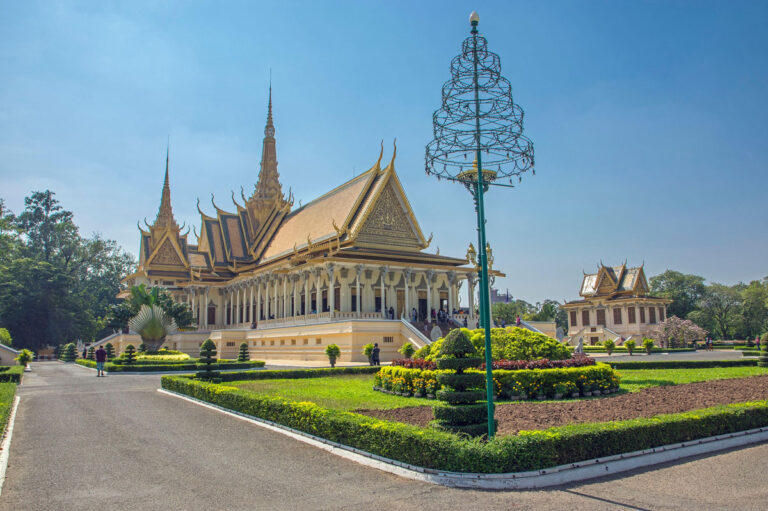
The Royal Palace is one of Phnom Penh’s most important landmarks and an impressive example of traditional Khmer architecture. Located close to the riverfront, the complex has served as the residence of Cambodia’s monarchy since the nineteenth century and contains several ceremonial buildings, landscaped courtyards, and ornate structures decorated with golden roofs and traditional motifs. One of the main attractions within the palace grounds is the Silver Pagoda, officially known as Wat Preah Keo Morakot. The temple is famous for its collection of valuable Buddha images and its floor decorated with thousands of silver tiles, although much of the flooring is normally covered for protection. Visitors can explore the areas open to the public, but access may occasionally be restricted during royal ceremonies. Appropriate clothing is required, with shoulders and knees covered. The Royal Palace and Silver Pagoda are best visited in the morning, when temperatures are more comfortable.
🏛️ National Museum of Cambodia
Located a short walk from the Royal Palace, the National Museum of Cambodia is one of the country’s most important cultural institutions. Housed in a distinctive terracotta-coloured building inspired by traditional Khmer architecture, it contains an extensive collection of sculptures, ceramics, and archaeological objects spanning different periods of Cambodian history. The museum is particularly renowned for its collection of Khmer sculptures, including remarkable examples from the Angkorian period. Many of the exhibits provide valuable context for understanding the artistic and religious traditions associated with Cambodia’s ancient temples. The peaceful central courtyard offers a pleasant contrast to the surrounding city streets. The museum is especially worthwhile for visitors interested in Khmer history and those planning to explore Angkor Wat and other archaeological sites elsewhere in Cambodia.
🕯️ Tuol Sleng Genocide Museum (S-21)
The Tuol Sleng Genocide Museum is one of the most significant and emotionally challenging places to visit in Phnom Penh. Originally a secondary school, the complex was converted into Security Prison 21 (S-21) during the Khmer Rouge regime, which ruled Cambodia from 1975 to 1979. Thousands of prisoners were detained, interrogated, tortured, and killed in connection with this prison. Today, the museum preserves classrooms converted into cells, photographs, documents, and personal testimonies that reveal the scale of the atrocities committed during that period. An audio guide is available and provides valuable historical context, making it particularly worthwhile for visitors unfamiliar with Cambodia’s recent history. The experience can be deeply disturbing, but it is also an important opportunity to understand events that continue to shape Cambodian society. Visitors should approach the museum with respect, avoiding inappropriate photography or behaviour around the memorial spaces.
🌿 Choeung Ek Genocidal Center
Located approximately 15 kilometres south of central Phnom Penh, Choeung Ek is one of the best-known sites associated with the mass killings carried out during the Khmer Rouge period. Commonly referred to as one of the Killing Fields, the site was used as an execution and burial ground for prisoners, many of whom had previously been detained at S-21. Today, it serves as a memorial to the victims, with a Buddhist stupa containing human remains and a series of marked locations explaining the history of the site. Audio guides provide historical information and testimonies, allowing visitors to understand what happened without the need for a conventional guided tour. Choeung Ek is often visited together with the Tuol Sleng Genocide Museum, as the two sites are closely connected historically. A tuk-tuk or private driver is generally the most practical way to reach the memorial from central Phnom Penh.
🛕 Wat Phnom
Wat Phnom is one of Phnom Penh’s most recognisable religious landmarks and is closely associated with the city’s origins. Situated on a small artificial hill in the northern part of the central district, the temple is traditionally linked to the legend of Lady Penh, who is said to have discovered sacred Buddha images and established a shrine on the site. A staircase decorated with traditional sculptures leads to the temple, which remains an active place of worship. The surrounding park is popular among local residents, particularly during the cooler hours of the day. Although the hill is relatively modest in height, Wat Phnom offers a pleasant introduction to the city’s religious traditions and can easily be combined with a visit to the nearby central market or railway station.
🛍️ Central Market (Phsar Thmei)
Central Market, locally known as Phsar Thmei, is one of Phnom Penh’s most distinctive buildings. Constructed during the French colonial period, the market is famous for its striking yellow Art Deco architecture and enormous central dome. Inside, vendors sell jewellery, watches, clothing, electronics, souvenirs, and numerous other products, while the surrounding sections contain fresh produce, flowers, household goods, and food stalls. Even visitors with little interest in shopping may find the building worth seeing for its architecture and lively atmosphere. The food stalls are particularly interesting in the morning, when the market is busy with local shoppers.
🧺 Russian Market (Toul Tom Poung)
The Russian Market, officially known as Phsar Toul Tom Poung, is one of Phnom Penh’s most popular shopping markets among visitors. Despite its name, it is a traditional Cambodian market that became known for attracting Russian residents and visitors during an earlier period of the city’s history. The market contains a dense network of stalls selling clothing, handicrafts, bags, souvenirs, jewellery, household items, and other products. Bargaining is common in many sections, particularly when purchasing souvenirs or clothing without fixed prices. The surrounding Toul Tom Poung neighbourhood has also developed a lively café and restaurant scene, making it an interesting area to explore beyond the market itself.
🌊 Sisowath Quay and the Riverside
Sisowath Quay is Phnom Penh’s main riverfront promenade and one of the most pleasant areas for an evening walk. Running alongside the Tonlé Sap River, it is surrounded by hotels, restaurants, cafés, bars, and several important landmarks, including the Royal Palace and Wat Ounalom. The waterfront becomes particularly lively in the late afternoon and evening, when local residents gather to walk, exercise, socialise, and enjoy the cooler temperatures. Boat excursions are also available, including sunset cruises along the Tonlé Sap and Mekong rivers. These trips offer a different perspective on the city skyline and the riverfront, particularly as the buildings begin to light up after sunset. The riverside is an easy area to explore on foot and provides an interesting glimpse into Phnom Penh’s everyday social life.
🚤 Koh Dach (Silk Island)
Koh Dach, commonly known as Silk Island, is a rural island in the Mekong River northeast of Phnom Penh. It offers a noticeable change of atmosphere from the busy capital, with quiet roads, traditional houses, agricultural land, and small communities associated with Cambodia’s weaving traditions. Visitors can explore local silk-weaving workshops, observe traditional production methods, and discover a more rural side of Cambodian life. Some workshops sell locally produced textiles, although the quality and origin of products may vary. The island is reached by road and local ferry connections, with tuk-tuks or private drivers providing a practical way to organise a visit. It is particularly suitable for a half-day excursion for travellers who want to experience the countryside without travelling far from Phnom Penh.
🍸 Bassac Lane and Phnom Penh Nightlife
Phnom Penh has a varied nightlife scene, ranging from casual riverside bars and live music venues to modern cocktail lounges and late-night entertainment districts. One of the most interesting areas is Bassac Lane, a small network of narrow streets and alleys near Street 308 in the Tonle Bassac neighbourhood. The area is known for its compact bars, creative cocktail venues, restaurants, and lively atmosphere, attracting both local residents and international visitors. The nearby BKK1 district also offers an extensive selection of restaurants, cafés, and bars, while the Riverside area remains a popular choice for casual evening drinks. Phnom Penh also has adult-oriented nightlife venues, particularly around some streets near the riverfront, but the atmosphere varies considerably between establishments. Visitors looking for a more relaxed evening may prefer the cocktail bars around Bassac Lane or one of the city’s rooftop venues.
Where and What to Eat in Phnom Penh
Phnom Penh offers an excellent introduction to Cambodian cuisine, known for its fragrant herbs, aromatic spice pastes, freshwater fish, and balanced combinations of sweet, sour, and savoury flavours. Traditional Khmer dishes can be found in small family-run restaurants, busy local markets, and simple street stalls, while a growing number of contemporary restaurants offer more refined interpretations of Cambodian cooking. The city’s food culture also reflects influences from neighbouring countries and its own historical connections with Chinese and French cuisine.
🍲 Traditional Cambodian Dishes to Try
- Fish Amok: One of Cambodia’s most famous dishes, typically prepared with freshwater fish, coconut milk, and aromatic kroeung spice paste, often steamed in banana leaves.
- Beef Lok Lak: Stir-fried marinated beef, commonly served with rice, vegetables, and a distinctive lime-and-pepper dipping sauce.
- Kuy Teav: A popular Cambodian breakfast consisting of rice noodles in a fragrant broth with pork, beef, or seafood, accompanied by fresh herbs and condiments.
- Bai Sach Chrouk: Grilled marinated pork served over rice, often accompanied by pickled vegetables and a light broth. Particularly popular for breakfast.
- Nom Banh Chok: Traditional Khmer rice noodles served with a fish-based curry gravy and fresh vegetables, commonly eaten in the morning.
- Samlor Korko: A traditional Cambodian soup or stew made with vegetables, herbs, kroeung, and often fish or meat, with numerous regional variations.
- Prahok Ktis: A rich dipping preparation made with fermented fish paste, minced pork, coconut milk, and aromatic ingredients, typically served with fresh vegetables.
- Num Pang: Cambodia’s version of a baguette sandwich, usually filled with meat, pâté, pickled vegetables, herbs, and sauces.
Rice is an essential part of Cambodian meals, and dishes are commonly shared at the table rather than served as separate courses.
🍢 Street Food and Local Markets
Central Market Food Stalls
Central Market is a good place to discover everyday Cambodian food, particularly during the morning hours. Vendors prepare noodle soups, grilled meats, rice dishes, fresh fruit, and traditional snacks for local shoppers. It is especially interesting for trying breakfast specialities such as kuy teav or bai sach chrouk in an informal environment.
Russian Market Food Stalls
The Russian Market also contains small food stalls serving local dishes, particularly around its outer sections and surrounding streets. Visitors can find noodles, grilled foods, rice dishes, smoothies, and traditional snacks. The area is particularly suitable for combining a market visit with a casual lunch or breakfast.
Phnom Penh Night Market
Located near the riverfront, close to Street 106, Phnom Penh Night Market is a popular evening destination offering clothing, souvenirs, casual food stalls, and occasional entertainment. Its food section is particularly interesting for inexpensive snacks and simple meals, although it is more tourist-oriented than some of the city’s traditional daytime markets. The market is generally busiest on weekend evenings.
🍽️ Notable Restaurants and Local Eateries
Eleven One Kitchen: Khmer Classics and Vegetarian Options
Eleven One Kitchen is a popular Cambodian restaurant with locations in BKK1 and near the Russian Market. Known for its relaxed atmosphere and focus on traditional Khmer dishes, it offers a broad menu that includes fish amok, beef lok lak, curries, salads, and vegetarian-friendly options. Its garden-style settings and reasonable prices make it a convenient choice for visitors looking for a comfortable introduction to Cambodian cuisine.
HoubHoub: Casual Cambodian Cooking
Located in the BKK1 area near Wat Langka, HoubHoub is a small restaurant specialising in traditional Khmer dishes prepared in an approachable, home-style manner. Its menu includes Cambodian favourites such as fish amok, lok lak, and local curries. It is a practical choice for visitors who want to try authentic flavours in a casual setting without the formality of an upscale restaurant.
Sovanna BBQ: Cambodian Grilled Specialities
Sovanna BBQ, in the Tonle Bassac area, is a popular local-style restaurant known for its grilled meats and Cambodian barbecue dishes. The atmosphere is informal and lively, particularly in the evening, when groups gather to share different preparations. It is a good option for travellers interested in experiencing a more social style of Cambodian dining, away from the polished presentation of tourist-oriented restaurants.
Malis: Refined Cambodian Cuisine
Located on Norodom Boulevard, Malis is one of Phnom Penh’s established restaurants specialising in refined Cambodian cuisine. Its menu draws on traditional Khmer recipes and local ingredients, presented in an elegant setting with a landscaped courtyard. Fish amok, traditional curries, and other regional preparations are among the dishes worth exploring. Prices are considerably higher than at ordinary local restaurants, making it more suitable for a special meal.
Sombok: Contemporary Khmer Gastronomy
Situated near the Riverside area, Sombok offers a contemporary interpretation of Cambodian cuisine, combining traditional ingredients and recipes with modern presentation techniques. The restaurant is associated with Cambodian women chefs and places particular emphasis on local culinary heritage. It is an interesting choice for travellers who want to explore the more creative side of Khmer gastronomy in a refined setting.
Where to Stay in Phnom Penh
Phnom Penh offers accommodation ranging from inexpensive guesthouses and backpacker hostels to comfortable boutique hotels and international luxury properties. For most visitors, staying in the central districts is the most practical choice, particularly around Riverside, BKK1, or Tonle Bassac. These areas provide convenient access to restaurants, tourist attractions, and transport services, although each has a different atmosphere.
🌊 Riverside and Daun Penh: Historic Attractions and Tourist Convenience
Riverside and Daun Penh are among the most convenient areas for visitors interested in Phnom Penh’s main historical attractions. The neighbourhoods around Sisowath Quay, the Royal Palace, and the National Museum contain numerous hotels, guesthouses, restaurants, bars, and cafés within a relatively compact area. Accommodation ranges from inexpensive budget rooms to boutique properties and comfortable riverside hotels. The main advantage is proximity to the city’s historic centre, allowing visitors to explore several attractions on foot. However, streets close to the nightlife areas can be noisy in the evening, so travellers looking for a quiet stay should choose their exact location carefully.
☕ BKK1: Restaurants, Cafés, and a Comfortable Base
BKK1, short for Boeung Keng Kang 1, is one of Phnom Penh’s most popular neighbourhoods among international visitors and long-term foreign residents. The area is characterised by modern hotels, serviced apartments, cafés, international restaurants, and a broad selection of local dining options. It is particularly suitable for couples, business travellers, and visitors who prefer a comfortable urban environment with numerous services nearby. Attractions such as the Royal Palace and Riverside are not usually within convenient walking distance, but they can be reached relatively easily by tuk-tuk. BKK1 is also close to the city’s lively restaurant and nightlife areas, making it a versatile choice for travellers who want to combine sightseeing with dining and evening activities.
🍸 Tonle Bassac: Modern Hotels and Nightlife
The Tonle Bassac neighbourhood, particularly around Bassac Lane and Street 308, is an interesting option for visitors who enjoy restaurants, cocktail bars, and a lively evening atmosphere. The area contains modern hotels, boutique accommodation, international restaurants, and entertainment venues, with convenient access to parts of BKK1 and the Independence Monument area. It is particularly appealing to younger travellers, couples, and visitors interested in Phnom Penh’s contemporary lifestyle. However, streets immediately surrounding popular bars can become noisy at night, so accommodation slightly away from the busiest lanes may be preferable for a quieter stay.
Useful Tips
Carry Cambodian riel and some US dollars. Both currencies are widely used in Phnom Penh, although riel is particularly convenient for small purchases, local markets, and transport. US dollar banknotes should be in good condition, as damaged or heavily worn notes may be refused. Change is often provided in Cambodian riel, even when paying in dollars.
Keep your destination saved on your phone. Phnom Penh’s streets are often identified by numbers, and some addresses can be difficult to locate without an exact map pin. Having the location ready in Grab or PassApp makes it easier to communicate with drivers and avoid unnecessary confusion.
Allow time for historical visits. Tuol Sleng and Choeung Ek are important memorial sites, but their content can be emotionally demanding. Rather than trying to combine them with a long list of other attractions, it is worth allowing enough time to understand their historical significance.
Safety and Local Considerations
Phnom Penh requires some attention to personal belongings, especially in busy tourist areas. Phone and bag snatching, sometimes carried out by thieves riding motorcycles, is a recognised problem, particularly around the Riverside and other central districts. Avoid holding your phone close to the road while walking, keep bags on the side away from traffic, and do not leave valuables exposed when travelling in an open tuk-tuk. Choosing tuk-tuks with protective side barriers can provide additional security.
When using taxis or tuk-tuks, it is advisable to arrange transport through recognised services such as Grab or PassApp, particularly at night. Unsolicited offers may involve inflated fares, while some drivers may attempt to negotiate prices after the journey has started. Confirming the destination and fare before departure helps avoid misunderstandings.
Extra caution is also advisable in certain nightlife establishments, particularly venues with unclear pricing or persistent street promoters. Unexpected charges and overpriced drinks can occur, and travellers should never leave beverages unattended. Choosing established venues and checking prices before ordering is a sensible precaution.
During the rainy season, heavy downpours can cause localised flooding and significant traffic disruption, including on roads connecting the city with the airport. Travellers should allow additional time for important transfers during periods of severe weather.
Phnom Penh: A City Shaped by History
Phnom Penh’s character is closely connected to its rivers and its history. Royal landmarks, traditional markets, and modern neighbourhoods reveal different sides of the capital, while places such as Tuol Sleng and Choeung Ek provide an important understanding of Cambodia’s recent past. Together, they make Phnom Penh a destination that offers much more than sightseeing alone.
Continue exploring
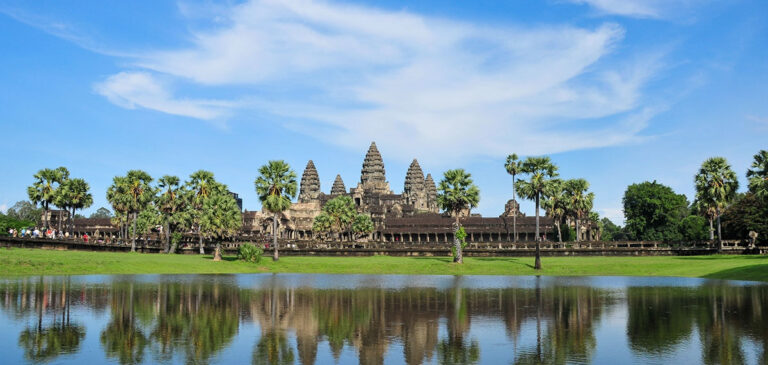 RouteHow to Get from Phnom Penh to Siem Reap
 RouteHow to Get from Phnom Penh to Sihanoukville
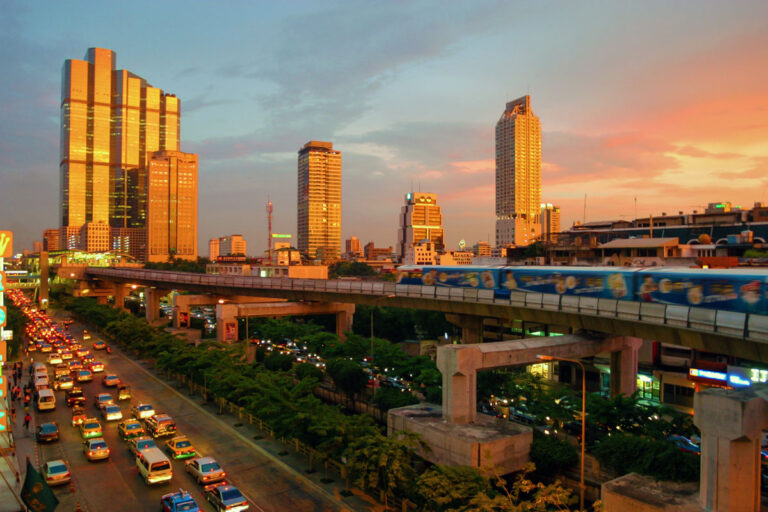 RouteHow to Get from Siem Reap to Bangkok
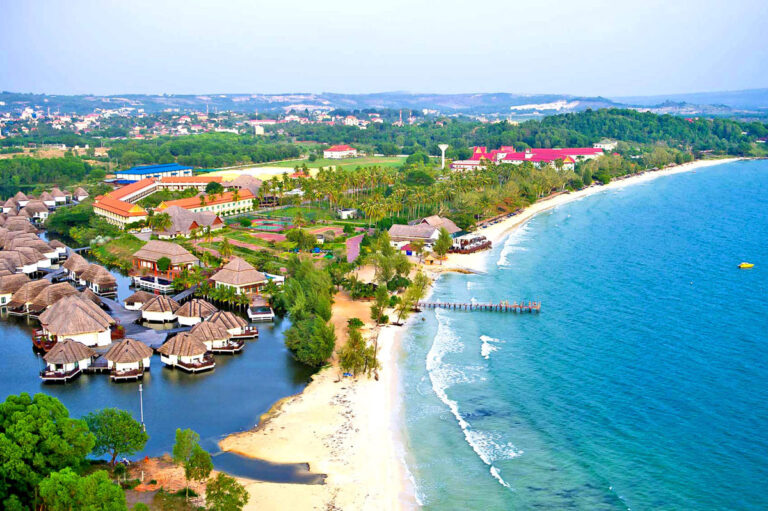 RouteHow to Get from Siem Reap to Sihanoukville
 RouteHow to Get from Sihanoukville to Phnom Penh
 RouteHow to Get from Ho Chi Minh City to Phnom Penh
 RouteHow to Get from Ho Chi Minh City to Siem Reap
 RouteHow to Get from Don Det to Siem Reap
 RouteHow to Get from Pakse to Siem Reap
 RouteHow to Get from Vientiane to Phnom PenhRouteHow to Get from Bangkok to Phnom Penh
 RouteHow to Get from Bangkok to Siem Reap