For most travellers, the simplest way to get from Tokyo to Seoul is a nonstop flight. Published timetables show services on the HND/NRT → ICN/GMP corridor, with an approximate flight time of about 2 hr 15 min to 3 hr. The practical decision is which operator and airport or terminal to use, how much baggage you need, and how you will reach your actual accommodation after landing.
Tokyo to Seoul at a glance
Nonstop flight
Fly from HND/NRT to ICN/GMP and allow time for check-in, immigration and the trip into Seoul.
Compare Haneda/Gimpo and Narita/Incheon
Compare airlines and airport arrangements; published operators include Korean Air, Asiana Airlines, Japan Airlines.
One-stop flight
Connect through Osaka (KIX) or Busan (PUS) when the direct schedule does not fit your dates. Check baggage and transit requirements.
| Option | Typical travel time | Typical one-way cost | Best for |
|---|---|---|---|
| Nonstop flight | about 2 hr 15 min to 3 hr flying plus check-in and transfers | Dynamic by date / baggage | Usually the most sensible overall journey |
| Alternative nonstop operator / departure | about 2 hr 15 min to 3 hr in the air | Compare all-in fare | Finding a better departure hour or baggage allowance |
| One-stop flight | Longer: depends on stopover via Osaka (KIX) or Busan (PUS) | Variable; may add baggage fees | Fallback on awkward dates or intentional stopovers |
Prices and schedules change. Check live schedules, current fares and ticket availability for your travel date.
For Tokyo to Seoul, these are planning ranges rather than live fare quotes. Confirm the current HND/NRT and ICN/GMP flight schedule and final cost for your travel date; the quoted flying time does not include road transfers, airport formalities or a possible delay at arrival immigration.
The normal choice: take a nonstop flight
Flying nonstop is the normal recommendation for Tokyo to Seoul. The published timetable includes Korean Air, Asiana Airlines, Japan Airlines, Jeju Air, although availability can vary by travel date and season. These are international flights, so the scheduled time in the air is only one part of the journey. You still need to reach the correct terminal early, pass outbound checks and complete arrival immigration before travelling to your hotel.
Tokyo–Seoul is not one airport pair. Haneda (HND)–Gimpo (GMP) can be convenient for central-city stays, while Narita (NRT)–Incheon (ICN) has numerous low-cost and full-service departures. Other combinations exist, so follow the precise codes on the ticket.
Some budget carriers operate primarily out of Narita, whereas the Haneda/Gimpo pairing may save ground-transfer time. A cheaper fare from Narita can lose its advantage if you are staying far from the correct rail corridor or need an inconvenient departure time.
Tokyo and Seoul share the same time zone, which simplifies transfers and check-in planning. But international security, immigration and travel into Seoul still make this much longer than an ordinary domestic flight.
When booking this journey, compare the complete fare from the operating carriers rather than the first fare shown. A seat or checked bag can change the value of a low-cost ticket, and arrival timing can change the cost of reaching your hotel. This is particularly important for Tokyo to Seoul, where Tokyo Haneda Airport (HND) or Narita International Airport (NRT) and Incheon International Airport (ICN) or Gimpo International Airport (GMP) have different ground-transfer patterns.
Getting to the departure airport in Tokyo
Tokyo has two major international airports. Haneda (HND) is usually easier for central Tokyo, while Narita (NRT) is farther away and requires a different rail or road plan. Avoid assuming that a ticket mentioning Tokyo uses the same airport as your previous flight; Narita Express, Keisei and the Haneda rail links serve different corridors.
Haneda and Narita are both called Tokyo airports, but the travel time from your hotel and the rail operators are different. Choose the route to the actual airport on your ticket and check the international terminal. If you are starting near a railway hub, a slightly more expensive flight may be worth it if it avoids a long early-morning cross-city transfer.
Arriving in Seoul: airport to your accommodation
Your airport transfer depends on whether the flight lands at Incheon (ICN) or Gimpo (GMP). ICN has AREX rail and airport-bus options, while GMP is closer to central Seoul and linked to metro and airport rail. If you are staying around Hongdae, Myeongdong, Seoul Station or Gangnam, check the exact line and final stop before boarding. The two airports are not terminals of the same building, so a separate-ticket connection between them requires a deliberate ground journey.
Before you leave the arrival hall at Incheon International Airport (ICN) or Gimpo International Airport (GMP), check that your driver or public transport route really serves your hotel area. A fare estimate from the airport to the nominal ‘city centre’ is not automatically relevant if you are staying in a different district. Keep the hotel’s street address saved offline and compare the total transfer price if you are travelling with several people.
If you are landing late, confirm whether your hotel will accept your arrival time and whether airport transport is available. The most reliable plan often involves a little extra margin for immigration and baggage collection, rather than fixing a pickup to the minute printed as the aircraft’s scheduled landing time.
Is a connecting flight ever worth it?
Connections via Osaka or Busan are generally hard to justify given the dense nonstop Tokyo–Seoul network. Use them only as part of an intentional stopover or when the nonstop on your travel date truly does not fit.
If you instead travel via Osaka (KIX) or Busan (PUS), a separate-ticket transfer can require baggage reclaim, a new check-in and immigration at the connecting airport. Confirm whether the carrier guarantees the entire Tokyo to Seoul itinerary and check transit entry rules before buying; a low fare with a risky short connection is not a reliable substitute for the nonstop flight.
Passports, visas and arrival formalities
South Korean entry rules depend on nationality. The official K-ETA notice extends its temporary exemption for eligible passports through 31 December 2026; it does not mean that all travellers are exempt from visas. Check K-ETA eligibility and any electronic arrival-card obligation before departure, particularly for travel after that date.
Which option should you choose?
- Take a nonstop flight when it is available at a reasonable all-in price; it eliminates an unnecessary intermediate airport and usually saves several hours.
- Compare Korean Air, Asiana Airlines, Japan Airlines and check baggage rules, airport code and flight time. An inconvenient arrival or the wrong terminal can negate a small fare saving.
- Choose a one-stop itinerary via Osaka (KIX) or Busan (PUS) only for a useful schedule, a protected connection, a planned stopover or a significant total-price advantage.
Departure and arrival points
| Option | Tokyo | Seoul |
|---|---|---|
| Nonstop flight | Tokyo Haneda Airport (HND) or Narita International Airport (NRT) | Incheon International Airport (ICN) or Gimpo International Airport (GMP) |
| One-stop alternative | Tokyo Haneda Airport (HND) or Narita International Airport (NRT) plus a transfer in Osaka (KIX) or Busan (PUS) | Incheon International Airport (ICN) or Gimpo International Airport (GMP) |
| Hotel ground transfer | City-side taxi, rail or permitted car pickup depending on location | Hotel district matters; check local train and taxi access |
Normal Things to do in Seoul
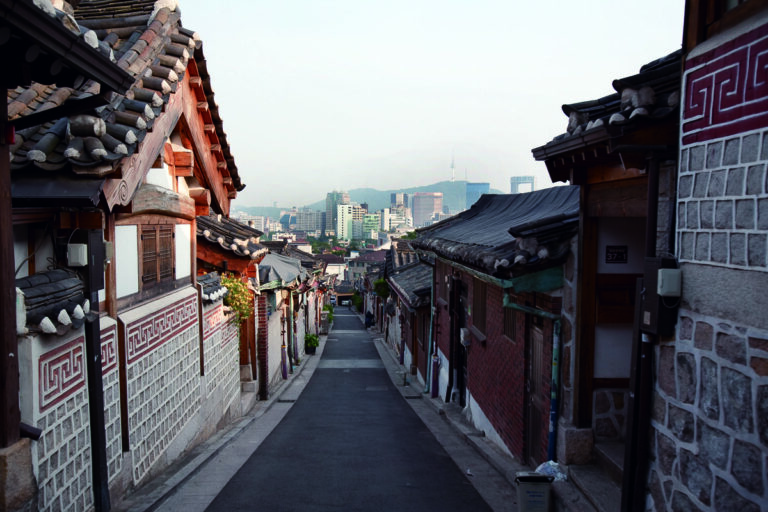
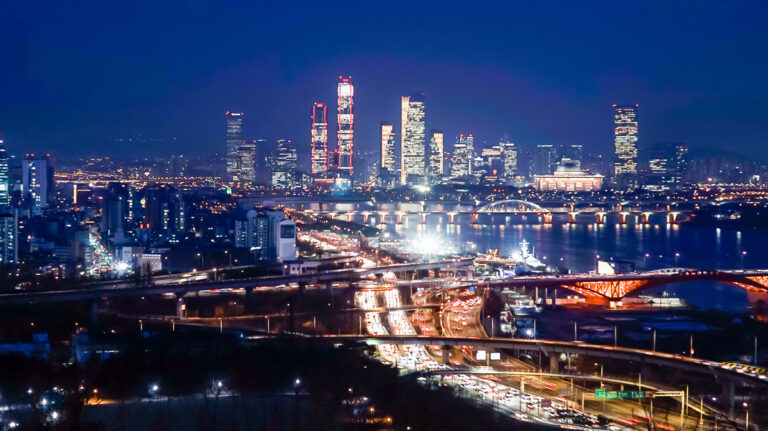
Seoul has several rewarding districts rather than one small historical centre. Gyeongbokgung Palace and the surrounding streets of Bukchon and Insadong make a good cultural day, though some residential alleys have visitor restrictions. Hongdae offers cafés, small shops and nightlife; Myeongdong is convenient for shopping and transport; the Han River parks are good for a quieter break. Public transport is comprehensive but station transfers and walking distances matter. If you are arriving late, it is sensible to have dinner near your hotel instead of taking another long journey across the city. Pick a base around a useful metro or airport-rail connection. If you are arriving from Tokyo, plan the first sightseeing day around the actual airport arrival hour; a long connection or late pickup is a good reason to keep the first evening simple.
How to plan the Tokyo to Seoul travel day
A workable plan starts with your actual hotel address, not the city names. Calculate the journey to Tokyo Haneda Airport (HND) or Narita International Airport (NRT), allow an international check-in buffer, and add time for arrival immigration and baggage collection at Incheon International Airport (ICN) or Gimpo International Airport (GMP). Then add the final ground transfer. This is the time that determines when you can realistically eat dinner, check in or take an onward train.
A nonstop flight of about 2 hr 15 min to 3 hr is not a about 2 hr 15 min to 3 hr door-to-door journey. If your destination is a distant island resort, a suburban district or an area on the far side of city traffic, the last leg may be substantial. Do not make an immovable appointment immediately after the flight’s scheduled arrival.
Before buying a Tokyo to Seoul ticket, confirm the current operating flight and baggage rules, then save the booking reference and the address of your Seoul accommodation for offline access. Check the entry information for South Korea while it can still be corrected, not after check-in has closed. A small amount of preparation matters more than squeezing a few minutes out of the scheduled flight time.
Practical tips
- Use the exact airport code or codes on the ticket: HND/NRT → ICN/GMP. City names are not sufficient on multi-airport routes.
- Compare the total cost after hold luggage, seat selection and payment charges, not the cheapest headline fare.
- Allow generous time to reach the departure airport in Tokyo; traffic and terminal access can be harder to predict than flying time.
- Check official South Korea visa and arrival-form requirements for your passport shortly before travel.
- If the first flight is delayed on a self-transfer, the onward carrier may not protect your booking. A protected nonstop ticket is often worth more than a small advertised saving.
Frequently asked questions
Can you fly nonstop from Tokyo to Seoul?
Yes. Published timetables list nonstop flights between the relevant airports, with operators including Korean Air, Asiana Airlines, Japan Airlines. Check your particular date because flight frequencies and availability can change.
How long does it take from Tokyo to Seoul?
The direct flight is typically about 2 hr 15 min to 3 hr in the air. Add airport access, international check-in, immigration, baggage collection and the road or rail transfer after arrival.
Which airport should I use in Tokyo?
The main departure airport or airports on this corridor are Tokyo Haneda Airport (HND) or Narita International Airport (NRT). Check the exact airport and terminal used by your operating flight, especially where a city has more than one international airport.
How do I get into Seoul after landing?
Arrive at Incheon International Airport (ICN) or Gimpo International Airport (GMP) and use a legitimate airport taxi, app pickup or relevant rail connection for your hotel area. The best option depends on luggage, time of day and the district where you are staying.
Is a one-stop flight cheaper?
Sometimes, but do not compare the base fare alone. A connection via Osaka (KIX) or Busan (PUS) can introduce baggage fees, airport changes or a long layover. Compare the final total and travel time against the nonstop option.
Do I need a visa or arrival form for Seoul?
Requirements depend on nationality, purpose and length of stay. Check official South Korea immigration guidance; a digital arrival form is normally not a substitute for a required visa or other entry permission.