For most travellers going from Busan to Seoul, the ktx high-speed train is the normal first choice. The published transport time is about 2¼–3 hr, but station or airport transfers change the real door-to-door trip. Compare the exact operating service and arrival terminal before paying: a ticket to the wrong side of Seoul can turn a short journey into a long travel day.
Busan to Seoul at a glance
KTX high-speed train
The most useful route for most travellers going from Busan to Seoul; check the exact terminal.
Express bus
The bus can save money but uses a different terminal on arrival.
Domestic flight
Only consider this after checking the real itinerary and its transfer conditions.
| Option | Typical transport time | Planning cost | Best for |
|---|---|---|---|
| KTX high-speed train | About 2¼–3 hr | Approx. ₩54,000–60,000 standard | Best overall for most visitors |
| Express bus | About 4–5 hr | Varies by ticket and date | Alternative when conditions fit |
| Domestic flight | About 1 hr flying; add airports | Check class and total transfers | Special-case itinerary |
Prices and schedules change. Check live schedules, current fares and ticket availability for your travel date.
Published durations and fares are planning ranges, not a live booking quote. A train number or flight may change, and the same city can contain multiple stations or airports. Confirm the actual service, terminal and price for the travel date before committing to accommodation or a connection.
The normal choice: take the ktx high-speed train
From Busan, the KTX station in the waterfront district is convenient for some central hotels but a significant transfer from Haeundae. Check your last-mile metro before reserving an early train.
KTX trains arrive at Seoul Station, which has useful metro and AREX connections. If your final destination is Gangnam, compare Suseo-bound services rather than assuming the fastest advertised train automatically serves your neighbourhood.
Start by checking the transport terminal closest to your actual accommodation in Busan. Busan Station near the waterfront is the key KTX terminus for Seoul, while Busan Central Bus Terminal is much farther north near Nopo metro station. Gimhae International Airport (PUS) is west of the main city and connects via light rail and transfers. The three hubs are not interchangeable; decide whether your departure is a train, bus or aircraft before calculating the city transfer.
The usual headline duration of about 2¼–3 hr measures the onboard leg. Add time to reach the station or airport, an appropriate check-in or boarding margin, and onward transport in Seoul. On a short urban rail trip these transfers can be the majority of the day; on a longer intercity leg they still change the best departure.
The alternative: express bus
The express bus from Busan Central Bus Terminal near Nopo takes longer but can save money. If you stay by Gwangalli or Nampo, allow extra time to reach Nopo before the bus departs.
Busan Central Bus Terminal is at Nopo, while Busan’s KTX station is closer to the harbour and Nampo. The cheapest bus fare may create a longer local transfer at the end of the day.
The bus gives a different terminal and ticket-class choice rather than a speed advantage. If your accommodation is close to its arrival point, the longer onboard time may still make sense, especially if the KTX requires another long local transfer.
Other transport options and when they make sense
A Gimhae-to-Gimpo flight saves time in the air but requires transit to both airports. It can be helpful for some onward domestic itineraries; it is not the same as a transfer to Incheon for an international departure.
Seoul Station and Suseo are separate hubs: a traveller staying in Gangnam may find a Suseo departure convenient, but should check the train’s actual origin in the current booking system rather than assume all trains are at Seoul Station.
Flying between Seoul and Busan may look appealing because the aircraft is airborne for roughly an hour. Gimpo and Gimhae are not the same place as the city-centre rail stations, so the route is mainly worthwhile if an airport is already part of the plan.
Stations, terminals and the last transfer
On the return direction, confirm the Seoul arrival as the counterpart of the route normally advertised between Seoul Station (서울역); Suseo only if ticketed and Busan Station (부산역). The operating train or airline may use a different station from an older sample timetable; the exact names on the reservation decide the local transfer.
Your airport transfer depends on whether the flight lands at Incheon (ICN) or Gimpo (GMP). ICN has AREX rail and airport-bus options, while GMP is closer to central Seoul and linked to metro and airport rail. If you are staying around Hongdae, Myeongdong, Seoul Station or Gangnam, check the exact line and final stop before boarding. The two airports are not terminals of the same building, so a separate-ticket connection between them requires a deliberate ground journey.
If you plan to arrive in Seoul and continue by another operator, do not treat two tickets as one protected connection. You may need to exit one station, travel across a city and pass a new security or boarding process. Booking the fastest first train often gives little advantage if its station is poorly placed for the next leg.
Booking, identity documents and practical costs
For Korean rail, use the official Korail booking channels or a reliable authorised seller and confirm which station and service appear on the ticket. A train from Seoul Station is not automatically the same departure as a service from Suseo. Busan Station, the KTX terminus, is distinct from Gimhae Airport and the central express bus terminal.
For coaches, use the named express-bus terminal and compare standard, deluxe and premium classes. Korean public holidays and Friday or Sunday travel can fill seats early. A bus fare is not a rail fare, and different tickets may have different refund or seat-selection conditions.
Which option should you choose?
- Choose ktx high-speed train when you want the simplest Busan to Seoul journey and can use the correct departure terminal.
- Consider express bus if its real timetable, baggage or ticket class gives a better total journey.
- Use domestic flight only after verifying its actual service, route and final destination; it is not necessarily cheaper or faster.
- Compare your hotel-to-terminal and terminal-to-hotel time as well as the advertised about 2¼–3 hr main leg.
Departure and arrival points
| Service | Busan | Seoul |
|---|---|---|
| KTX high-speed train | Busan Station (부산역) | Seoul Station (서울역); Suseo only if ticketed |
| Express bus | Busan Central Bus Terminal (Nopo) | Seoul Express Bus Terminal |
| Domestic flight | Busan Gimhae (PUS) | Seoul Gimpo (GMP) |
Normal Things to do in Seoul
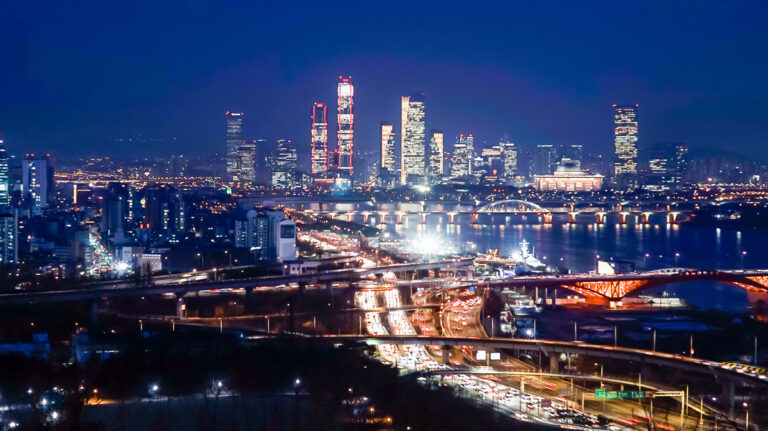
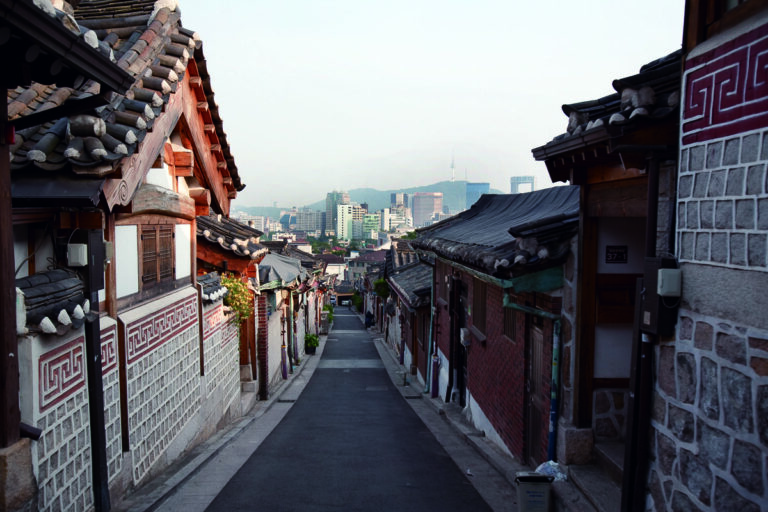
Seoul has several rewarding districts rather than one small historical centre. Gyeongbokgung Palace and the surrounding streets of Bukchon and Insadong make a good cultural day, though some residential alleys have visitor restrictions. Hongdae offers cafés, small shops and nightlife; Myeongdong is convenient for shopping and transport; the Han River parks are good for a quieter break. Public transport is comprehensive but station transfers and walking distances matter. If you are arriving late, it is sensible to have dinner near your hotel instead of taking another long journey across the city. Pick a base around a useful metro or airport-rail connection.
Planning the journey from hotel to hotel
On this Busan to Seoul route, write down four separate timings: (1) leaving your accommodation; (2) reaching the correct station or airport and completing any checks; (3) the scheduled onboard transport; and (4) reaching your next accommodation from the arrival terminal. This is a more realistic comparison than choosing only the shortest listed transport leg.
Busan Station near the waterfront is the key KTX terminus for Seoul, while Busan Central Bus Terminal is much farther north near Nopo metro station. Gimhae International Airport (PUS) is west of the main city and connects via light rail and transfers. The three hubs are not interchangeable; decide whether your departure is a train, bus or aircraft before calculating the city transfer.
If you are booking a separate onward train or aircraft, add a meaningful connection buffer. A late first service does not oblige an unrelated second operator to hold your booking or reimburse you. Keep a plan for a missed connection, especially on the final service of the evening.
Arriving in Seoul late can change your transport options. Check the last relevant metro or train, have your hotel address saved offline in the local language, and choose an authorised taxi or other safe alternative if public transport has stopped. Many travellers find an earlier arrival more useful than the lowest headline price.
Luggage, comfort and ticket changes
Keep documents, medicines, money and a small set of essentials in a bag you can reach during the trip. If travelling by rail, be ready for station security and the train boarding cutoff. If travelling by air, check cabin and checked-baggage limits, especially on discounted domestic fares.
If a timetable update changes the station or departure time, reassess your ground transfers before confirming the replacement. A refundable ticket or a slightly earlier departure may be worth the difference if you have a hotel check-in, a separate flight or an activity that cannot be moved.
Transport data changes faster than most sightseeing information. This guide is a planning aid rather than a live inventory of seats and prices. Use the official operator and station details for the travel date and check the current conditions again shortly before departure.
Practical tips
- Save your exact Busan departure point and Seoul arrival point, including the local-language station name where applicable.
- Verify the current train number or flight and its operating date; never assume a sample schedule runs daily.
- Keep the passport or other identification that matches the reservation accessible for boarding.
- Allow for baggage, station security, public transport and the last local transfer rather than relying on onboard duration.
- Check change and refund rules before buying a cheap fare that may not suit a revised itinerary.
- Avoid tightly connecting separate bookings, particularly after the last convenient local train or during peak holidays.
Frequently asked questions
What is the easiest way to travel from Busan to Seoul?
For most travellers, ktx high-speed train is the normal choice. The published main-leg duration is about 2¼–3 hr; include the correct terminal and the onward transfer.
How long does Busan to Seoul take?
The primary transport leg is about 2¼–3 hr. A full hotel-to-hotel trip takes longer because of station or airport access, check-in and the arrival transfer.
Which station or airport do I use in Busan?
Check your real ticket. Common options include Busan Station (부산역), but not every service leaves from the same terminal, and local approaches differ.
Where will I arrive in Seoul?
Published services can use Seoul Station (서울역); Suseo only if ticketed. Verify the exact printed endpoint and plan local transport to your accommodation before booking.
Is express bus better than ktx high-speed train?
It depends on the date, price and actual transfer. The alternative is described as about 4–5 hr, but compare the full journey, fare conditions and location of each terminal.
When should I book and what documents should I carry?
Use the official rail, bus or airline ticketing service and carry the passport or other identification required by the operator. Confirm baggage and refund rules before paying.