
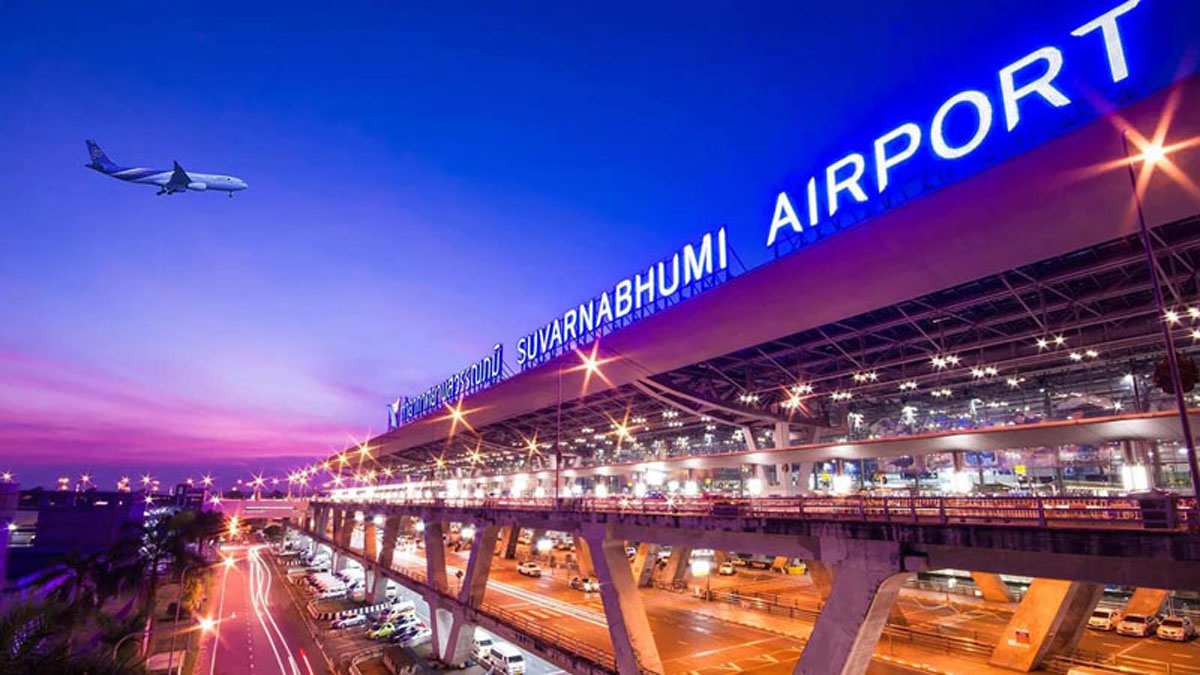
Bangkok Suvarnabhumi Airport (BKK) is Thailand’s main international gateway and one of Southeast Asia’s major aviation hubs. For millions of travelers, it is the first stop on a journey through Bangkok, Thailand or the wider region. Despite its modern facilities and relatively straightforward layout, the airport’s size can make navigating its terminals, immigration procedures and transportation services challenging, particularly for first-time visitors arriving after a long international flight. Understanding how Suvarnabhumi Airport works can make the experience considerably easier, from passport control and baggage collection to currency exchange, airport transfers and connecting flights. This guide covers the airport’s layout, arrival and departure procedures, essential services and practical information for a smooth journey through Bangkok’s busiest airport, including useful details that are not always easy to find before traveling.
Suvarnabhumi Airport at a Glance
Suvarnabhumi Airport is located in Samut Prakan province, approximately 30 kilometers east of central Bangkok. Opened in 2006, it handles a large proportion of Thailand’s international air traffic, along with numerous domestic and connecting flights. Its airport code is BKK, which is particularly important because Bangkok has another major airport, Don Mueang (DMK), located in the northern part of the metropolitan area. Although both airports serve Bangkok, they are separate facilities, and traveling between them requires a road transfer. Always check the airport code when booking flights, particularly if your itinerary involves different airlines or separately purchased tickets.
| Airport information | Details |
|---|---|
| Airport name | Suvarnabhumi International Airport |
| IATA code | BKK |
| Location | Samut Prakan, approximately 30 km east of Bangkok |
| Main passenger terminal | Main Terminal Building (MTB) |
| Additional boarding facility | Satellite Terminal 1 (SAT-1) |
| International arrivals | Level 2 |
| Departure check-in | Level 4 |
| Public taxis | Level 1 |
| Airport Rail Link | Basement Level B1 |
| Airport information hotline | 1722 |
The airport operates 24 hours a day, although individual shops, transportation services and passenger facilities may follow different schedules. Its main passenger areas are connected by elevators, escalators and moving walkways, with directional signs in Thai and English throughout the terminal. Familiarizing yourself with the airport’s main levels before arriving is one of the simplest ways to avoid unnecessary confusion.
Understanding the Airport Layout
Suvarnabhumi Airport consists of a large Main Terminal Building connected to several boarding concourses and an additional satellite facility known as SAT-1. Unlike airports where different airlines operate from completely separate terminal buildings, most passenger services, check-in procedures and immigration formalities at Suvarnabhumi are concentrated in the main terminal. Understanding the difference between these two facilities is particularly useful for passengers arriving at or departing from satellite boarding gates.
Main Terminal Building
The main terminal is organized across several levels, each serving a specific purpose. Level 4 accommodates airline check-in counters and access to departure formalities, while Level 3 contains restaurants, cafés, shops and additional passenger services. Level 2 is dedicated to arrivals, including immigration, baggage collection, customs and the public arrivals hall. Ground transportation services are primarily located on Level 1, while the Airport Rail Link station is situated on Basement Level B1.
For arriving passengers, the most important reference point is Level 2, where the international arrivals process ends. Travelers heading into Bangkok by train should follow the Airport Rail Link signs toward the basement, while those taking a taxi or using a ride-hailing application should proceed to Level 1. Departing passengers should head directly to Level 4, where airline check-in counters and flight information screens are located. Elevators and escalators connect the different floors, making it relatively easy to move around the building even when carrying luggage.
Satellite Terminal 1 (SAT-1)
Satellite Terminal 1, commonly referred to as SAT-1, is an additional boarding facility designed to increase the airport’s passenger capacity. It is connected to the Main Terminal Building by an underground Automated People Mover (APM), a driverless train that transports passengers between the two facilities. SAT-1 serves flights assigned to boarding gates S101–S128, and passengers departing from these gates generally complete check-in, security screening and passport control in the main terminal before following the signs to the satellite connection.
The APM journey itself takes only a few minutes, although passengers should allow additional time for walking, waiting and locating their gate. SAT-1 is not a separate airport terminal requiring a road transfer, but the additional journey can become significant when combined with the distances involved in navigating the main terminal. Travelers arriving at SAT-1 who need to enter Thailand must follow the designated route back to the main terminal, while connecting passengers should follow the appropriate transfer signs.
Arriving at Suvarnabhumi Airport
International arrivals generally follow the same sequence: disembarkation, immigration, baggage collection, customs and exit into the public arrivals hall. The overall process is straightforward, but the time required varies considerably depending on the arrival gate, immigration queues and baggage delivery. During busy periods, several large international flights may arrive close together, creating longer waiting times at passport control. Travelers with onward transportation arrangements should therefore allow some flexibility rather than assuming they will be outside the airport immediately after landing.
Step 1: Follow the Arrivals and Immigration Signs
After leaving the aircraft, follow the signs marked Arrivals, Passport Control or Immigration. Depending on your arrival gate, reaching passport control may involve a fairly long walk, although moving walkways are available along many terminal corridors. Passengers arriving at SAT-1 should follow the designated route toward the Main Terminal Building, using the internal APM connection where required.
If Bangkok is your final destination, continue toward immigration rather than following the international transfer signs. Passengers connecting to another international flight may have a different route, depending on their itinerary and whether they can remain within the airport’s international transit area. Following the correct signs from the beginning helps avoid unnecessary detours through the terminal.
Step 2: Complete Immigration Procedures
Before reaching passport control, prepare your passport and any documents required for entry into Thailand. Entry conditions vary according to nationality, purpose of travel and length of stay, with some travelers eligible for visa exemptions and others requiring a visa or additional authorization. Immigration officers may ask about your intended accommodation, the purpose of your visit, your planned departure date or your onward travel arrangements. Having this information readily available can make the process easier, particularly when mobile connectivity is limited.
Saving your hotel reservation and onward ticket on your phone before departure is a useful precaution, preferably with offline copies that can be accessed without an internet connection. Passengers should also ensure that their passport meets the applicable entry requirements and that any necessary authorization has been obtained before traveling. The permission to enter Thailand and the permitted duration of stay are determined during the immigration process, regardless of whether the traveler holds a visa or qualifies for a visa exemption.
Thailand Digital Arrival Card (TDAC)
Foreign nationals entering Thailand are generally required to complete the Thailand Digital Arrival Card (TDAC), an electronic form that replaces the former paper arrival card. The TDAC collects essential travel information, including passport details, arrival information, accommodation details and any required health declarations. The form must be submitted within the three-day period before arrival, including the arrival date, and submission is free. Each traveler, including children, must be covered by the required arrival information, although family and group submissions can be prepared together. After completing the process, travelers receive a confirmation that should be saved and kept accessible during their journey.
The TDAC is not a visa and does not replace any immigration authorization required for entry into Thailand. Travelers remaining in international transit without passing through Thai immigration generally do not need to complete the form. However, passengers entering the country during a self-transfer or an overnight connection must comply with the applicable entry requirements. Completing the TDAC before traveling is strongly recommended to avoid unnecessary complications after landing, particularly when arriving during busy periods.
Step 3: Collect Your Checked Baggage
After passing immigration, proceed to the baggage reclaim area and check the information screens for the carousel assigned to your flight. Several flights may be handled simultaneously, so verify the flight number rather than relying on the movements of other passengers. Before leaving the baggage area, check that the suitcase you collect is yours, particularly if you are traveling with a common luggage design or color. If your checked baggage is delayed, damaged or missing, report the issue to your airline’s baggage service desk before leaving the restricted arrivals area.
Keep your baggage tag and boarding pass available, as they may be required when submitting a report. Personal belongings lost elsewhere in the airport are handled differently from checked baggage, so travelers who misplace an item in a public area should contact an airport information counter to identify the appropriate lost-property service.
Step 4: Pass Through Customs
Once you have collected your luggage, continue toward customs. International arrivals generally provide a green channel for passengers with nothing to declare and a red channel for goods requiring declaration. Travelers must choose the appropriate channel based on the items they are carrying, and customs officers may inspect baggage even when passengers use the green channel.
Thailand has restrictions on certain products, substances and imported goods, while other items may be subject to quantity limits or declaration requirements. Travelers carrying valuable goods, commercial quantities of products or potentially restricted items should understand the applicable rules before departure rather than assuming that everything permitted in their home country can also be brought into Thailand.
Step 5: Enter the Public Arrivals Hall
After clearing customs, passengers enter the public arrivals hall on Level 2. This area provides access to information counters, meeting points, currency exchange services and other facilities useful immediately after landing. Travelers expecting a hotel representative or private transfer should follow the pickup instructions provided with their booking, as meeting points may differ between operators. Before leaving the building, consider whether you need local currency, mobile connectivity, food or access to the airport’s Wi-Fi. Organizing these essentials inside the terminal is often easier than trying to arrange them after reaching the transportation areas, particularly when arriving late at night or traveling with several pieces of luggage.
Essential Services at Suvarnabhumi Airport
Suvarnabhumi offers a wide range of services designed to accommodate international passengers, including currency exchange facilities, ATMs, mobile connectivity, baggage storage, restaurants, lounges and medical assistance. Many are available in public areas, while others are located beyond security or immigration checkpoints. The availability, location and operating hours of individual services can change, so passengers should pay attention to terminal signage and ask at an information counter when necessary.
Currency Exchange and ATMs
Thailand’s currency is the Thai baht (THB), and travelers arriving without local cash can use currency exchange counters or ATMs located throughout the airport. Exchange services are available in the arrivals area, although the rates offered by some counters immediately outside baggage claim may be less favorable than those available elsewhere in the terminal. One of the most convenient places to exchange money is the SuperRich currency exchange counter on Basement Level B1, near the entrance to the Airport Rail Link station. SuperRich is known for offering competitive exchange rates, making it a particularly useful option for travelers who want to obtain Thai baht before heading into Bangkok. Other independent exchange counters operate in the same area, so comparing the displayed rates before exchanging a large amount is worthwhile.
For passengers planning to use the Airport Rail Link, this location is especially practical because the currency exchange counters are situated close to the railway station entrance. Instead of changing money immediately after customs, travelers can head directly to Level B1, compare the available rates and obtain the cash they need before continuing their journey. ATMs are also available throughout the airport, although local withdrawal charges and fees imposed by the cardholder’s bank may apply. Some ATMs offer to convert the transaction into the cardholder’s home currency, a service known as dynamic currency conversion, which can involve an unfavorable exchange rate. Choosing to be charged in Thai baht will generally leave the conversion to your card provider, although the final cost still depends on your card’s conditions.
SIM Cards, eSIM and Mobile Connectivity
Several mobile operators offer tourist SIM cards at Suvarnabhumi Airport, allowing passengers to activate a local number or mobile data package soon after arrival. These services can be particularly convenient for travelers who need to contact accommodation providers, navigate Bangkok or book transportation. Prepaid packages vary in duration, data allowances, speed limits and included calls, so it is advisable to compare the validity period with the length of your stay and check whether the advertised data allowance includes restrictions or reduced speeds after reaching a particular threshold. A passport is normally required for local SIM registration.
A particularly convenient option is to purchase a Tourist SIM on Basement Level B1, near the Airport Rail Link station, where mobile operator counters are located close to the currency exchange area. This allows travelers to exchange money at SuperRich and then purchase a SIM card before boarding the train into Bangkok, completing two useful tasks in the same part of the airport. Some smaller mobile phone counters may accept only cash or prefer cash payments, so having Thai baht available beforehand can simplify the purchase. SIM registration and activation are generally straightforward and can often be completed within a few minutes, although waiting times depend on how busy the counter is.
Travelers with compatible smartphones can also consider using an eSIM, which may be activated before arriving in Thailand. This eliminates the need to purchase a physical SIM at the airport and can provide immediate internet access after landing. However, eSIM compatibility depends on the device, and phones locked to a specific mobile operator may have restrictions. Before buying any package, make sure your device is compatible and that the available coverage and data allowance match your travel plans.
Free Airport Wi-Fi
Suvarnabhumi provides complimentary Wi-Fi for passengers in the terminal, making it possible to contact accommodation providers, check travel arrangements and use transportation applications before leaving the airport. The connection process may require registration and acceptance of service conditions, while access can be subject to session limits or other restrictions. When using public Wi-Fi, make sure you select a legitimate airport network rather than an unfamiliar connection with a similar name. Avoid carrying out sensitive financial transactions on unsecured networks, and consider using mobile data when additional privacy is important.
Luggage Storage
Temporary baggage storage is available at Suvarnabhumi Airport and can be particularly useful during long layovers, before hotel check-in or when visiting Bangkok for a few hours without carrying large suitcases. Storage services operate in several airport areas, including counters around the arrivals and departures levels and facilities near the Airport Rail Link station. Prices and conditions vary according to the operator, baggage size and storage duration, so passengers should check the applicable rates and collection procedures before leaving their belongings.
Keep your storage receipt safe and confirm the operating hours, especially if you are planning to collect your luggage late at night or shortly before a flight. Essential medication, passports, valuables and anything you may need unexpectedly should remain in your possession rather than being placed in stored luggage. Some operators also offer luggage delivery services, which may be useful when traveling directly to accommodation in Bangkok.
Restaurants, Shops and Convenience Stores
Suvarnabhumi has a broad selection of restaurants, cafés, convenience stores and retail outlets. Food options range from quick snacks and international chains to Thai dishes and more substantial meals, with prices varying considerably between different areas of the terminal. Passengers looking for more affordable food may find useful options in the public areas rather than exclusively around the departure gates. Convenience stores are also practical for purchasing drinks, snacks and basic travel supplies before heading into Bangkok or beginning a longer journey. Duty-free shops and additional dining facilities are available after departure formalities, although accessibility depends on the passenger’s flight and location within the airport.
Airport Lounges and Rest Areas
Airline lounges and independent airport lounges are available in different parts of Suvarnabhumi, including international departure areas and SAT-1. Access may depend on the airline, ticket class, frequent-flyer status, lounge membership or the possibility of purchasing entry. Facilities vary between lounges and may include meals, beverages, comfortable seating, showers, workspaces and Wi-Fi. Not every lounge offers the same services, and some have restrictions on the duration of a visit or the time before departure when access is permitted.
Before purchasing lounge access, confirm that the facility is located in an area you can reach with your boarding pass and that you have enough time to return to your assigned gate. Passengers planning a long connection should also distinguish between lounges located before and after immigration, as moving between these areas may not be possible without meeting the relevant entry requirements.
Smoking Areas at Suvarnabhumi Airport (BKK)
Suvarnabhumi Airport has particularly strict smoking regulations and does not provide indoor smoking rooms for passengers. Smoking is prohibited throughout the terminal, including the departure concourses and boarding gate areas, as well as outside the building except in officially designated smoking zones. This is particularly important for smokers facing long international flights or extended layovers, as the availability of smoking facilities becomes considerably more limited once passengers have entered the restricted departure area.
The designated outdoor smoking areas are located to the right of Exit 1 and to the left of Exit 10, on Levels 1 and 4 of the Main Terminal Building. These locations are accessible from the public areas of the airport and provide the main smoking facilities for arriving and departing passengers. When leaving the terminal through the indicated exits, travelers should follow the direction of the designated smoking area rather than assuming that smoking is allowed anywhere along the exterior of the building. These locations are particularly useful for departing passengers who want to smoke before completing security and immigration procedures.
The only notable smoking facility accessible from within the international departure area is the outdoor smoking terrace at the Miracle Business Class Lounge, located in Concourse D, near Gate D5. Although the lounge itself is situated inside the terminal complex, its smoking terrace is an outdoor space rather than an indoor smoking room. Access may be included for eligible Business Class passengers or through participating lounge programs such as Priority Pass and DragonPass, depending on the conditions of the relevant airline or membership. Travelers without complimentary access can generally purchase admission for approximately 1,500 Thai baht, although the price and entry conditions may vary. Not all Miracle Lounges have smoking terraces, so it is important to identify the specific Miracle Business Class Lounge near Gate D5 rather than assuming that any lounge with the same name provides this facility.
For passengers departing on international flights, the most practical option is to use one of the designated outdoor smoking areas before passing through security and immigration, unless they intend to access the Miracle Business Class Lounge near Gate D5. This distinction is even more important for travelers with long connections, as leaving the secure transit area to smoke may require passing through Thai immigration, meeting the applicable entry requirements and completing departure procedures again. Passengers should therefore plan accordingly rather than expecting to find a general-access smoking room after security.
Medical Assistance and Accessibility
Passengers requiring medical assistance, wheelchair services or additional support can contact airport personnel or approach an information counter. Travelers with reduced mobility should ideally arrange assistance through their airline before departure, allowing enough time for the necessary coordination during check-in, boarding and transfers. Airport staff can also help passengers locate essential services, including medical facilities, accessible restrooms and assistance points. For general airport information, the contact number is 1722.
Getting from Suvarnabhumi Airport to Bangkok
Several transportation options connect Suvarnabhumi Airport with Bangkok and surrounding destinations. The most practical choice depends on where you are staying, the time of arrival, the amount of luggage you are carrying and whether you prefer public transportation or a door-to-door service. The Airport Rail Link is generally a convenient option for avoiding road traffic, while taxis and ride-hailing services are often more comfortable for passengers traveling with heavy luggage or staying far from a railway station.
| Transport | Departure location | Best for |
|---|---|---|
| Airport Rail Link | Level B1 | Economical travel toward central Bangkok |
| Public taxi | Level 1, Gates 4–7 | Direct journeys with luggage |
| Grab | Level 1, Gate 4 | App-based private transport |
| Public buses | Designated stops or transportation center | Selected destinations and budget travel |
| Intercity coaches | Designated bus stops or transportation center | Travel outside Bangkok |
| Private transfer | Arranged meeting point | Families, groups and prebooked journeys |
Airport Rail Link
The Airport Rail Link (ARL) connects Suvarnabhumi Airport with Phaya Thai, providing a convenient route toward central Bangkok without the uncertainty of road traffic. The station is located on Basement Level B1 and can be reached by following the Airport Rail Link signs from the arrivals hall. The railway serves several intermediate stations, including Makkasan, where passengers can connect to the MRT Blue Line through nearby Phetchaburi station, and Phaya Thai, which provides access to the BTS Sukhumvit Line. These connections make the Airport Rail Link especially useful for reaching accommodation near Bangkok’s elevated and underground railway networks.
The journey from Suvarnabhumi to Phaya Thai takes approximately 30 minutes, with fares ranging from 15 to 45 baht depending on the destination. Services generally operate from around 5:30 a.m. until midnight, although travelers should check the timetable for their particular day of travel. Tickets can be obtained at the station, and passengers should remember that the Airport Rail Link, BTS and MRT are separate systems with their own ticketing arrangements. A change between networks may therefore require purchasing another ticket or using a different accepted payment method. The train is particularly convenient for travelers carrying manageable luggage and staying near a railway station, while passengers with large suitcases, young children or accommodation requiring several additional transfers may find a taxi more comfortable.
Public Taxis
Public taxis operate 24 hours a day from designated areas on Level 1, between Gates 4 and 7. Passengers should follow the Public Taxi signs and obtain a queue ticket from the airport’s automated system before proceeding to the assigned vehicle. Standard airport taxi journeys are generally charged using the regulated meter system, with an additional airport surcharge of 50 baht. Expressway tolls are paid separately, and applicable baggage charges may also be added. Keep the queue ticket until the end of the journey, as it contains useful information in case of a problem.
Having your hotel’s address saved on your phone is advisable, especially if the accommodation is located in a smaller street or an area unfamiliar to the driver. A taxi is often the easiest choice for families, travelers carrying several suitcases and passengers arriving after the Airport Rail Link has stopped operating. The main disadvantage is Bangkok’s traffic, which can make journey times significantly longer during busy periods. Using the designated airport taxi service rather than accepting unsolicited transportation offers helps reduce the risk of misunderstandings over fares and pickup arrangements.
Grab and App-Based Transportation
Grab provides app-based transportation from Suvarnabhumi Airport, with a designated pickup point on Level 1 near Gate 4. Passengers can select an available vehicle category, review the estimated cost and follow the pickup instructions displayed in the application. App-based services can be convenient for travelers who prefer arranging transportation digitally and want to see the fare conditions before confirming a booking. However, prices and waiting times depend on demand, and the availability of different vehicle categories may vary.
After booking, proceed to the designated pickup area rather than waiting at an arbitrary terminal entrance. Keeping mobile data or Wi-Fi active is important because drivers may need to communicate with passengers through the application. If you are traveling with several passengers or large suitcases, check the selected vehicle’s luggage capacity before confirming the ride.
Buses and Intercity Connections
Public buses, coaches and other road transport services connect Suvarnabhumi with selected areas of Bangkok and destinations outside the capital. Some depart from stops near the main terminal, while others use the airport’s Public Transportation Center, which is connected to the terminal by shuttle services. Among the available connections are services toward Bangkok’s historic districts and longer-distance routes to destinations such as Pattaya and Hua Hin.
Departure locations, schedules and ticketing arrangements differ between operators, so travelers should confirm where the service leaves before purchasing a ticket. Passengers planning to continue directly to another Thai destination may find these services convenient, particularly when they want to avoid traveling into central Bangkok before beginning the next part of their journey. However, buses may offer less flexibility than taxis or trains when traveling with oversized luggage or arriving outside normal operating hours.
For more information about the city, including public transportation, neighborhoods and practical travel advice, explore the Bangkok Travel Guide on NormalTravels.
Departing from Suvarnabhumi Airport
Passengers departing from Suvarnabhumi begin their journey on Level 4 of the Main Terminal Building, where airline check-in counters and self-service facilities are located. Because the airport handles a large volume of international flights, arriving with sufficient time is important, especially during busy travel periods. For international departures, arriving approximately three hours before the scheduled flight is a useful general guideline, although airlines may have different check-in deadlines. Additional time may also be necessary for passengers requiring special assistance, traveling with oversized luggage or completing additional documentation procedures.
Check-In and Baggage Drop
After reaching Level 4, check the departure information screens to locate your airline’s assigned check-in row. Counter assignments can change, so the airport displays should be used even if you have already received preliminary check-in information. Some airlines offer self-service kiosks and automated baggage drop facilities, while others require passengers to use staffed counters. Travelers who have checked in online and are carrying only cabin baggage may be able to proceed directly to departure formalities, depending on the airline and any document-verification requirements.
Before handing over checked luggage, ensure that your passport, boarding pass, valuables, medication and other essential items remain in your cabin bag. Passengers intending to claim a tourist VAT refund should also check whether their purchases require customs inspection before baggage check-in. Completing any necessary inspection before surrendering your luggage is important, as certain purchased items may need to be presented during the refund process.
Security and Passport Control
International passengers must complete the appropriate security screening and departure immigration procedures before reaching the boarding gates. Keep your passport and boarding pass accessible, and follow the instructions displayed at each checkpoint regarding electronics, liquids and other items in cabin baggage. The time needed to complete these procedures depends on passenger traffic and airport operations. Although Suvarnabhumi is designed to handle large volumes of travelers, long queues can occur during busy departure periods, making it important not to leave check-in or security until the last moment.
Finding Your Boarding Gate
After completing departure formalities, check the airport information screens for your assigned boarding gate. Gate numbers may change, so verify the information again before making your way to the departure area. Passengers assigned to gates S101–S128 must travel to Satellite Terminal 1 using the underground Automated People Mover. Follow the signs for SAT-1 and allow enough time for walking, the internal train journey and locating the gate after arrival.
Suvarnabhumi’s departure areas are extensive, and distances between facilities can be considerable. Travelers should avoid assuming that a boarding gate is nearby simply because they have already passed security or reached the duty-free shopping area. If you plan to visit a restaurant, lounge or shopping area before boarding, check the gate location and the boarding time first.
Connecting Flights at Suvarnabhumi Airport
Suvarnabhumi is an important international connecting hub, serving passengers traveling between Asia, Europe, Oceania and other regions, as well as those continuing to domestic destinations within Thailand. Connecting procedures depend on the airlines involved, whether the flights are on the same booking and how checked baggage is handled. The most important distinction is whether passengers can remain within the international transit area or must formally enter Thailand before checking in for their next flight.
International to International Connections
Passengers connecting between two international flights may be able to remain airside without passing through Thai immigration. In this situation, follow the signs marked International Transfer or Connecting Flights rather than those leading toward immigration and baggage reclaim. Depending on the airline and itinerary, travelers may need to collect an onward boarding pass at a transfer desk, complete additional security screening or change boarding areas using the airport’s internal transport system.
Passengers connecting to flights departing from SAT-1 should follow the corresponding satellite gate signs and use the Automated People Mover when required. Not every international connection qualifies for an airside transfer, particularly when flights have been booked separately or the airline requires passengers to check in again. Confirm the applicable procedure before departure rather than assuming that international transit is always possible, and allow sufficient time to move between the relevant boarding areas.
International to Domestic Connections
Travelers arriving on an international flight and continuing to a domestic destination will generally need to complete the applicable entry procedures for Thailand. Depending on the airline and baggage arrangements, this may involve immigration, customs, additional security screening and potentially collecting or rechecking baggage. Some airlines offer coordinated international-to-domestic transfers with specific procedures for connecting passengers, while independently booked flights may require the complete arrival and departure process.
Checking the baggage arrangements and transfer instructions before leaving your departure airport helps avoid confusion after landing. If your checked luggage is tagged through to your final destination, confirm whether any customs or baggage procedures are still required during the connection, as these can differ depending on the airline and itinerary.
Self-Transfers and Separate Tickets
A self-transfer occurs when a traveler is responsible for managing the connection between flights, often because the tickets were purchased separately. Unlike a protected airline connection, a self-transfer may require collecting checked baggage, entering Thailand, checking in again and passing through the necessary departure procedures. This distinction is particularly important for travelers who require a visa or must satisfy specific immigration conditions. Even when the final destination is outside Thailand, leaving the international transit area can trigger the country’s entry requirements.
Separate tickets also create a financial risk. If the first flight is delayed and the second flight is missed, the onward airline may have no obligation to provide a replacement flight. Travelers arranging self-transfers should therefore allow a substantial time margin, understand the conditions attached to each reservation and consider whether the savings justify the additional risk.
Transferring Between Suvarnabhumi and Don Mueang
Bangkok’s two major airports, Suvarnabhumi (BKK) and Don Mueang (DMK), are located in different parts of the metropolitan area. Traveling between them requires a journey by road, and transfer times can vary substantially according to traffic conditions. A free airport shuttle service connects the two airports for eligible passengers transferring between flights. At Suvarnabhumi, the shuttle departs from Level 2 near Gate 3, with services generally operating between 5:00 a.m. and midnight at approximately 30-minute intervals.
Passengers must provide appropriate proof of onward travel and identification to use the shuttle. The service is intended for connecting airline passengers and is not available as a general public transportation option. If your itinerary includes both airports, remember that you may also need to pass through immigration, collect baggage, check in again and complete security procedures. A short connection that might be manageable within a single airport can become impractical when a transfer across Bangkok is required.
Arriving Late at Night
Suvarnabhumi operates around the clock, making late-night and early-morning arrivals common. However, not every transportation service runs continuously, and this can affect how travelers reach their accommodation after landing. The Airport Rail Link normally stops operating around midnight, so passengers landing shortly before the final service should consider the additional time required for immigration, baggage collection and reaching the basement station. Even if the aircraft arrives before midnight, there is no guarantee that passengers will be able to catch the final train.
Public taxis and designated app-based transport services operate throughout the night, making them practical alternatives when railway services are unavailable. Travelers arriving at unusual hours should also confirm that their accommodation offers late check-in or has arrangements for guests reaching the property after reception hours. For passengers with an early onward flight, staying at an airport-area hotel may be more convenient than traveling into central Bangkok and returning only a few hours later.
Common Mistakes to Avoid
Although Suvarnabhumi is generally straightforward to navigate, several common mistakes can create unnecessary delays, additional costs or complications during a journey.
Confusing BKK with DMK. Bangkok’s two main airports are separate facilities, and changing between them requires a road transfer. Always check the airport code printed on your booking confirmation, particularly when traveling with multiple airlines.
Going to the wrong transportation level. Arrivals are located on Level 2, public taxis on Level 1 and the Airport Rail Link on Level B1. Following the correct signs immediately after leaving customs saves unnecessary movement between floors.
Underestimating immigration waiting times. Passenger numbers can vary substantially throughout the day, and immigration queues may be longer when several international flights arrive close together. Avoid making tightly scheduled arrangements immediately after landing.
Assuming all transportation operates overnight. The airport is open 24 hours, but the Airport Rail Link and some bus services have limited operating schedules. Late-night travelers should plan an alternative before arriving.
Changing money at the first counter without comparing rates. Exchange rates may vary between airport counters. Travelers heading toward the Airport Rail Link can compare the currency exchange services on Level B1, including SuperRich, before changing larger amounts.
Assuming smoking is permitted outside any terminal entrance. Smoking is restricted to designated areas, including the outdoor locations near Exits 1 and 10 on Levels 1 and 4. Travelers should avoid smoking in non-designated areas, even when they are outside the terminal building.
Assuming every Miracle Lounge has a smoking area. The outdoor smoking terrace is associated with the Miracle Business Class Lounge near Gate D5. Other lounges with similar names should not be assumed to offer the same facility.
Using unofficial transportation offers. Passengers should use the designated public taxi queue, official ride-hailing pickup area or a transfer arranged in advance. Avoid agreeing to transportation with individuals approaching travelers unsolicited inside or outside the terminal.
Forgetting entry requirements during a self-transfer. Separate flight bookings can require passengers to enter Thailand, even when they are continuing to another country. Immigration requirements must be considered before making these reservations.
Leaving insufficient time to reach the boarding gate. Some gates involve long walks, and SAT-1 requires an additional internal train journey. Check your gate early and allow enough time to reach it without rushing.
Frequently Asked Questions
Is Suvarnabhumi the main airport in Bangkok?
Yes. Suvarnabhumi Airport (BKK) is Bangkok’s principal international aviation hub, handling numerous long-haul, regional and domestic services. The city is also served by Don Mueang Airport (DMK), which accommodates many domestic and regional flights, including services operated by low-cost airlines.
Is Suvarnabhumi Airport difficult to navigate?
Despite its large size, Suvarnabhumi has a relatively logical layout and clear directional signs in English and Thai. The most useful reference points are Level 2 for arrivals, Level 4 for departures, Level 1 for taxis and Level B1 for the Airport Rail Link. Passengers using SAT-1 should allow additional time for the internal transfer.
How long does immigration take at Suvarnabhumi?
Immigration waiting times vary depending on passenger numbers, arriving flights and staffing conditions. Some travelers pass through relatively quickly, while others experience longer queues during busy periods. It is advisable to leave a flexible margin before arranging onward transportation or making time-sensitive appointments.
Do I need a TDAC if I am only changing flights in Bangkok?
Travelers who remain within the international transit area without passing through Thai immigration generally do not need a Thailand Digital Arrival Card. However, if your connection requires entering Thailand, such as when collecting baggage during a self-transfer, the applicable entry requirements, including the TDAC where required, must be satisfied.
Where is the best place to exchange money at Suvarnabhumi Airport?
The currency exchange area on Basement Level B1, near the Airport Rail Link station, is a useful place to compare competitive exchange rates. SuperRich operates a counter in this area and is often a convenient choice. Travelers should compare the displayed rates before making larger transactions, as the best rate can vary.
Can I buy a Tourist SIM near the Airport Rail Link?
Yes. Mobile operator counters are available on Level B1, near the Airport Rail Link area. This makes it convenient to exchange currency, purchase a Tourist SIM and activate mobile data before taking the train into Bangkok. Some counters may require cash, so having Thai baht available can be helpful.
Can I smoke inside Suvarnabhumi Airport?
No. Suvarnabhumi Airport does not provide indoor smoking rooms, and smoking is prohibited throughout the terminal except in designated outdoor facilities. The main outdoor smoking areas are located to the right of Exit 1 and to the left of Exit 10 on Levels 1 and 4. An outdoor smoking terrace is also accessible through the Miracle Business Class Lounge near Gate D5, subject to lounge admission requirements.
Is there a smoking area after security at Suvarnabhumi Airport?
Yes, but access is limited. The Miracle Business Class Lounge in Concourse D, near Gate D5, has an outdoor smoking terrace accessible to lounge guests. Eligible Business Class passengers and members of participating programs such as Priority Pass or DragonPass may be able to enter through their existing benefits, while other travelers can generally purchase access for approximately 1,500 baht. There are no general-access indoor smoking rooms in the international departure area, and passengers should not assume that other Miracle Lounges have smoking facilities.
Can I travel from Suvarnabhumi to central Bangkok by train?
Yes. The Airport Rail Link connects Suvarnabhumi with Phaya Thai and several intermediate stations, including Makkasan. Passengers can transfer to Bangkok’s BTS or MRT networks at selected stations, making the railway a convenient option for reaching many central neighborhoods while avoiding road congestion.
Are taxis available at Suvarnabhumi during the night?
Yes. Public airport taxis operate 24 hours a day from designated areas on Level 1. Passengers should use the airport’s queue-ticket system and allow for the applicable airport surcharge, tolls and any other regulated charges. Ride-hailing services and prearranged transfers are also available as alternatives.
Can I sleep at Suvarnabhumi during a long layover?
Passengers can find seating and waiting areas throughout the airport, although comfort and access vary by location. Lounges and nearby hotels may provide more comfortable options for longer stays. Travelers planning to remain airside overnight should confirm that their flight arrangements allow them to stay within the transit area.
Is there free Wi-Fi at Suvarnabhumi Airport?
Yes. Free Wi-Fi is available in the terminal, although access may require registration and may be subject to session limits. Travelers should connect to a legitimate airport network and exercise the usual precautions when using public internet connections, particularly for sensitive transactions.
Final Tips for a Smooth Experience
Suvarnabhumi Airport is large and busy, but its layout and services make it relatively easy to navigate once you understand the main procedures. Preparing your passport, entry information, accommodation details and transportation plans before arrival can save time and reduce uncertainty, particularly after a long international flight. Once through immigration and customs, taking a few minutes to organize local currency, mobile connectivity and ground transportation can make the journey into Bangkok considerably more comfortable. Travelers using the Airport Rail Link can conveniently combine currency exchange at SuperRich and a Tourist SIM purchase on Basement Level B1 before boarding the train, while those departing should allow adequate time for check-in, security, immigration and the journey to their boarding gate.
If your flight uses SAT-1, remember that reaching the satellite facility requires an additional internal transfer. Travelers with connecting flights should establish whether they can remain airside or must formally enter Thailand, especially when traveling on separate tickets. Passengers who smoke should locate the designated outdoor smoking areas near Exits 1 and 10 before completing departure formalities or consider the Miracle Business Class Lounge near Gate D5 if eligible for access. With a little preparation and a basic understanding of the terminal layout, Bangkok Suvarnabhumi Airport can be a convenient and manageable starting point for exploring Thailand and beyond.
Continue exploring
 RouteHow to Get from Bangkok to Chiang Mai
 RouteHow to Get from Vientiane to Nong Khai
 RouteHow to Get from Bangkok to Ayutthaya
 RouteHow to Get from Chiang Mai to Pai
 RouteHow to Get from Siem Reap to Bangkok
 RouteHow to Get from Bangkok to Hua Hin
 RouteHow to Get from Chiang Mai to Bangkok
 RouteHow to Get from Bangkok to Pattaya
 RouteHow to Get from Pattaya to Hua Hin
 GuideBangkok Travel Guide
 GuidePai Travel Guide
 GuideChiang Mai Travel Guide