
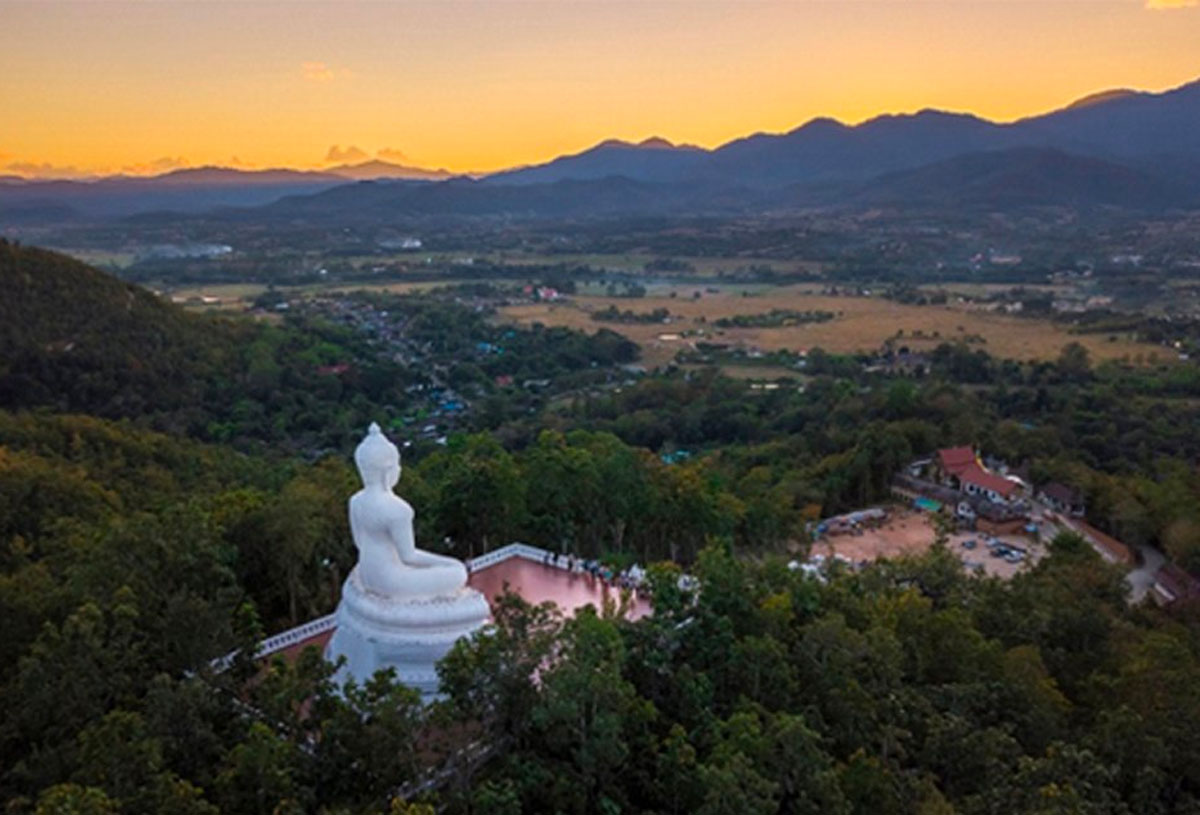
Pai is a small mountain town in northern Thailand, located in a picturesque valley surrounded by forested hills and rice fields in Mae Hong Son province. Once mainly known as a backpacker destination, it has developed into a popular stop for travellers exploring the north of the country, attracted by its relaxed atmosphere, natural scenery, and easygoing lifestyle. The town itself is compact, with a handful of streets filled with guesthouses, cafés, restaurants, small shops, and lively evening markets, while most of its attractions are scattered throughout the surrounding countryside. Waterfalls, hot springs, panoramic viewpoints, and traditional villages make Pai an interesting destination for those who enjoy nature and a slower pace of travel. Two or three nights are generally enough to explore the main attractions without rushing, although many visitors choose to stay longer. The most pleasant period is usually from November to January, when temperatures are cooler and the surrounding landscape is particularly enjoyable. The rainy season, roughly from May to October, brings lush green scenery, while the later dry-season months can be affected by smoke and poor air quality.
Main Transport Hubs
🚐 Pai Bus Station
Pai’s small bus station is located in the town centre, within walking distance of the main guesthouses, restaurants, and Walking Street. It is the principal arrival and departure point for travellers using public transport, particularly those travelling between Pai and Chiang Mai. Prempracha Transport operates regular minivan services connecting Pai with Chiang Mai, while services also continue towards destinations in Mae Hong Son province. Other operators, including Aya Service, provide minivan connections using their own pickup and departure points around town.
The journey from Chiang Mai generally takes around three to four hours along Highway 1095, a winding mountain road famous for its hundreds of sharp bends. Travellers prone to motion sickness should consider taking appropriate precautions before departure. During busy periods, particularly around holidays and the cooler months, booking minivan seats in advance is advisable. Pai has a small airport, but it does not currently have scheduled commercial passenger flights. There is also no railway connection to the town.
Getting Around Pai
Pai’s compact centre is easy to explore, but the surrounding attractions are spread across the valley, often several kilometres away. Unlike larger Thai destinations, Pai has no extensive public transport network, so getting around depends mainly on walking, renting a scooter, or arranging local transport.
🚶 Walking and Cycling
Walking is the easiest way to explore central Pai. Most guesthouses, restaurants, cafés, shops, and the evening market are concentrated within a relatively small area, making it possible to enjoy the town without using any transport. Bicycles can be useful for short trips around the quieter roads near town, although the surrounding countryside includes hills and longer distances that may be demanding in the heat.
🛵 Scooters and Motorbikes
Renting a scooter is one of the most popular ways to explore Pai independently. Rental shops are concentrated around the town centre, and a scooter makes it easier to reach attractions such as Pai Canyon, waterfalls, hot springs, and viewpoints without arranging individual transfers. However, Pai is not an ideal place to learn how to ride. Some roads are steep, winding, or uneven, especially when travelling towards more remote attractions, and riding during heavy rain can be particularly dangerous.
A helmet is essential, and visitors must have the appropriate motorcycle licence and valid driving documents for Thailand. Travelling without the correct licence may also invalidate insurance coverage. Before renting, inspect the vehicle, photograph any existing damage, and clarify the rental conditions, including deposits and insurance.
🚕 Local Drivers and Organised Tours
Travellers who prefer not to ride a scooter can arrange private drivers, local songthaews, or organised excursions through guesthouses and tour agencies. Songthaews, the shared pickup trucks commonly used in northern Thailand, can also be hired for transfers to nearby attractions. However, Pai does not have an extensive network of scheduled local services, so journeys often need to be arranged individually. Agree on the fare, destination, and return arrangements before departure, particularly when visiting attractions outside town. App-based ride-hailing services are not as consistently available as in larger Thai cities, so they should not be relied upon as the main way to get around.
Things to See and Do in Pai
🌄 Pai Canyon
Pai Canyon, also known as Kong Lan, is one of the most distinctive natural attractions around Pai. Located south of town along the road towards Chiang Mai, it consists of narrow reddish earthen ridges overlooking steep valleys and forested hills. The canyon is particularly popular in the late afternoon, when the changing light creates beautiful contrasts across the landscape. Sunset attracts numerous visitors, especially during the high season. Several paths lead along the ridges, but some sections are extremely narrow, with steep drops and limited protective barriers. Visitors can enjoy excellent views without attempting the more exposed trails, which require suitable footwear, balance, and considerable care. The terrain can become slippery after rain.
🛕 Wat Phra That Mae Yen: The White Buddha
Located on a hillside just outside the town centre, Wat Phra That Mae Yen is Pai’s most recognisable religious landmark. The temple is particularly famous for its large white Buddha statue overlooking the valley. Reaching the statue involves climbing a long staircase, but the elevated position offers panoramic views of Pai and the surrounding mountains. Early morning and late afternoon are particularly pleasant times to visit, when temperatures are cooler and the light is softer. As this is an active Buddhist religious site, visitors should dress respectfully, covering shoulders and knees, and behave appropriately around worshippers.
🌉 Boon Ko Ku So Bamboo Bridge
The Boon Ko Ku So Bamboo Bridge, sometimes called the Bamboo Bridge or Merit Bridge, is a long bamboo walkway extending across rice fields in the countryside outside Pai. Originally built to provide monks with a convenient route between a local monastery and nearby communities, the bridge has become a popular attraction for visitors interested in the area’s rural landscape. Walking along the gently elevated bamboo pathway offers views across the surrounding fields and mountains. The scenery changes considerably with the seasons: during the growing period, the rice fields can be bright green, gradually turning golden before the harvest. At other times of year, the fields may be dry or recently harvested, creating a different atmosphere. The bridge can be reached by scooter or arranged local transport and is particularly enjoyable in the morning, before the strongest heat of the day.
💦 Mo Paeng and Pam Bok Waterfalls
The countryside surrounding Pai contains several waterfalls, two of the most frequently visited being Mo Paeng and Pam Bok. Mo Paeng Waterfall, west of town, consists of a series of rocky cascades and natural pools surrounded by vegetation. It is relatively easy to reach and is popular with visitors looking to cool off in a natural setting. Water levels vary with the season, and the smooth rocks can be extremely slippery, particularly after rain.
Pam Bok Waterfall offers a different environment, with water flowing between steep rock walls into a narrow gorge. The surrounding landscape gives it a more enclosed atmosphere, and the short approach provides a pleasant change from Pai’s open valley scenery. Both waterfalls are generally more impressive during or shortly after the rainy season, when water levels are higher. Conditions can change considerably, however, and swimming should only be considered where it is permitted and safe. Strong currents, slippery rocks, and sudden increases in water flow can make some areas dangerous.
♨️ Tha Pai Hot Springs
Located in a forested area south of town, Tha Pai Hot Springs is one of the area’s main natural attractions. Hot mineral water emerges from the ground and flows through a series of pools with different temperatures. Some areas are suitable for bathing, while the water near the source can be dangerously hot and must not be entered. The surrounding forest creates a pleasant environment for relaxing, especially during the cooler months. Visiting early in the morning can be particularly enjoyable, although the springs may become busy during weekends and holidays. Other natural hot springs exist around Pai, including Sai Ngam, but access conditions, facilities, and entrance fees may vary. Visitors planning to explore alternative springs should check current local information before setting off.
🏮 Santichon Village and Yun Lai Viewpoint
Santichon Village, west of Pai, is associated with a community of Chinese Yunnanese heritage. The area has developed into a small tourist attraction where visitors can explore traditional-style buildings, sample Yunnanese-inspired food, and learn about elements of the community’s cultural background. Above the village, Yun Lai Viewpoint offers sweeping views across the Pai Valley and surrounding mountains. It is especially popular around sunrise, when mist sometimes settles over the valley, creating a distinctive landscape. The road leading up to Yun Lai is steep in places, so inexperienced scooter riders may prefer to arrange local transport. Santichon and the viewpoint can easily be combined into a single outing.
🛍️ Pai Walking Street
Pai Walking Street is the centre of the town’s evening activity and one of the experiences that characterise a visit to Pai. As evening approaches, sections of the central streets fill with food stalls, small vendors, handicrafts, clothing, souvenirs, and casual places to eat. The atmosphere is informal and lively, with travellers browsing the stalls, stopping for snacks, and gathering in the surrounding bars and cafés. The market is particularly active during the main tourist season, while the number of vendors and operating evenings can vary at quieter times of year. Even when the market is less busy, the surrounding streets remain the main area for dining and socialising. Pai also has a relaxed nightlife scene, with small bars, live music, and casual venues popular among backpackers and younger travellers. It is considerably smaller in scale than the nightlife districts of Thailand’s larger cities.
Where and What to Eat in Pai
Despite its small size, Pai offers a surprisingly varied food scene. Traditional northern Thai dishes can be found alongside familiar Thai specialities, vegetarian restaurants, international cafés, and small eateries catering to the town’s international traveller community. The evening market is particularly convenient for casual meals, while several established local restaurants provide good opportunities to discover regional flavours.
🍜 Northern Thai Dishes to Try
Northern Thailand has its own culinary traditions, with flavours and preparations that differ from those commonly associated with central and southern Thai cuisine. Some specialities worth trying include:
- Khao Soi: A rich northern Thai curry noodle soup, usually prepared with chicken or beef and topped with crispy noodles, pickled mustard greens, and lime.
- Sai Ua: Northern Thai grilled sausage seasoned with herbs, lemongrass, kaffir lime leaves, and spices.
- Nam Prik Noom: A roasted green chilli dip, often served with fresh vegetables, sticky rice, or crispy pork skin.
- Gaeng Hung Lay: A northern Thai pork curry with influences from neighbouring Myanmar, characterised by ginger, garlic, and aromatic spices.
Pai also offers familiar Thai dishes such as Pad Thai, Pad Kra Pao, fried rice, and various curries, making it easy to find something suitable for different tastes.
🍢 Pai Walking Street Food Stalls
The evening market is one of the most enjoyable places to eat in Pai. Rather than choosing a single restaurant, visitors can walk between the stalls and sample different snacks, grilled dishes, noodles, desserts, and freshly prepared food. The selection typically includes both Thai specialities and international street food, reflecting the town’s popularity among foreign travellers. Grilled meats, fresh fruit, smoothies, roti, and small portions of savoury dishes are commonly available. It is particularly convenient for an informal dinner, especially for travellers who prefer trying several different foods without spending the evening in a restaurant.
🍽️ Local Restaurants and Cafés
Na’s Kitchen: Traditional Thai Cooking
Na’s Kitchen is a well-known family-run restaurant in Pai, appreciated for its Thai home-style cooking and generous selection of traditional dishes. Curries, stir-fries, and soups feature prominently on the menu, making it a good option for travellers looking for familiar Thai flavours in a relaxed setting.
Charlie & Lek: Thai Food and Vegetarian Options
Charlie & Lek is another established restaurant in central Pai, offering Thai dishes with a good selection of vegetarian-friendly options. The menu includes curries, stir-fried vegetables, salads, and other traditional preparations. Its casual atmosphere and reasonable prices have made it a popular choice among visitors.
Khao Soi Zister’s: Northern Thai Noodles
For travellers interested in trying northern Thai cuisine, Khao Soi Zister’s is a small local eatery particularly associated with its namesake dish. It is a suitable option for a simple lunch centred on one of the region’s most characteristic noodle preparations.
Om Garden Cafe: Breakfast and International Food
Pai also has a lively café culture, and Om Garden Cafe is one of its established names. Known for its garden setting and a menu featuring breakfast dishes, salads, and international options, it offers a change from traditional Thai food. It is particularly popular among travellers looking for a relaxed breakfast or brunch.
Where to Stay in Pai
🏡 Pai Town Centre
For most visitors, Pai town centre is the most practical area to stay, particularly around Walking Street and the surrounding roads. The town is small enough that hotels, guesthouses, hostels, restaurants, cafés, shops, and the minivan station are generally within easy walking distance. Accommodation ranges from inexpensive backpacker hostels and simple guesthouses to comfortable boutique hotels and small bungalow-style properties. Some establishments are located along the nearby Pai River, offering a quieter atmosphere while remaining within walking distance of the centre.
Travellers interested in nightlife and socialising may prefer accommodation close to Walking Street, although rooms directly beside bars can be noisy during the evening. Those looking for greater tranquillity can choose properties on quieter side streets or near the river, checking that the walking route into town is convenient. There are also attractive resorts and countryside bungalows farther out in the valley, but these are generally less practical for visitors without their own transport. For a short stay, choosing accommodation in or immediately around the centre is usually the simplest solution.
Useful Tips
Bring a light jacket during the cooler months. Although daytime temperatures are generally pleasant, mornings and evenings can become surprisingly cool between November and February, especially in accommodation surrounded by open countryside.
Carry some cash. Many small restaurants, market stalls, rental shops, and local transport providers prefer cash payments. Having smaller banknotes is particularly useful for everyday purchases.
Allow enough time to enjoy the surroundings. Pai’s main attractions are scattered around the valley rather than concentrated in town. Grouping nearby places into the same outing is more practical than making repeated journeys in different directions.
Safety and Local Considerations
One of the most important considerations when visiting Pai is seasonal air pollution. From approximately February to April, agricultural burning and forest fires across northern Thailand can produce heavy smoke and high concentrations of fine particulate matter, commonly known as PM2.5. During particularly severe periods, visibility across the valley can be significantly reduced, and outdoor activities may become uncomfortable or potentially harmful, especially for people with respiratory conditions. Checking local air-quality readings before travelling is strongly recommended during these months.
The rainy season brings a different set of concerns. Heavy rainfall can make mountain roads slippery and occasionally cause localised flooding or landslides. Travellers should pay particular attention to road conditions when visiting remote attractions, especially after prolonged rain. Waterfalls and streams can also change rapidly following heavy downpours, so swimming or approaching fast-flowing water requires particular caution.
Pai has a generally relaxed atmosphere, but its popularity among young travellers and backpackers should not lead visitors to underestimate the risks associated with alcohol and motorcycle riding. Roads outside town are often poorly lit at night, and riding after drinking is particularly dangerous. Visitors should arrange alternative transport rather than attempting to return to their accommodation on a scooter after an evening out.
Pai: A Small Town in a Wide Valley
Pai has grown into a popular stop on the northern Thailand travel circuit, yet it remains a small town at heart. Its appeal comes as much from the surrounding valley, with its waterfalls, viewpoints, and rice fields, as from the cafés and evening market in the centre.
Continue exploring
 RouteHow to Get from Bangkok to Chiang Mai
 RouteHow to Get from Vientiane to Nong Khai
 RouteHow to Get from Bangkok to Ayutthaya
 RouteHow to Get from Chiang Mai to Pai
 RouteHow to Get from Siem Reap to Bangkok
 RouteHow to Get from Bangkok to Hua Hin
 RouteHow to Get from Chiang Mai to Bangkok
 RouteHow to Get from Bangkok to Pattaya
 RouteHow to Get from Pattaya to Hua Hin
 GuideBangkok Travel Guide
 GuideChiang Mai Travel Guide
 GuideHua Hin Travel Guide